Blog

  • Creating a safer world for our children by raising them to be resilient

    Creating a safer world for our children by raising them to be resilient

    By Tammi Pitzen, Executive Director of the Children’s Advocacy Center of Jackson County

    Spoiler alert!  This is really an opinion piece and personal in some regards.  You will be reading a lot of “I” statements and a lot of things that are based on my personal experience.  If that interests you then I invite you to continue reading.

    Generally, when we talk about child abuse, we talk about prevention or intervention.  Prevention comes in a lot of different forms.  Some examples are classes teaching you to recognize and respond to signs of abuse (like our Protect Our Children program), increasing efforts to address social problems (i.e. substance abuse, poverty, or homelessness) or increasing awareness.  Interventions usually come after an episode of abuse has occurred.  Examples of these are medical evaluations and treatments, mental health services, forensic interviews, advocacy and support to the victim and their non-offending caregivers, and prosecution of the offender.

    I have been musing a lot over prevention programming and interventions and how they fit together. 

    Traditionally, the work of a Child Advocacy Center (in the national model sense) has been on the intervention side.  Many CAC’s have either long-established prevention programs or are beginning to dip their toes into the prevention arena.  

    Most of my professional experience has been in tertiary prevention.  Tertiary prevention is defined as actions that reduce impact of injury that has already occurred or preventing on going injury by detecting and responding to prevent long term problems.  What this means in the CAC world is we help to give parents tools to keep their kids safe in the future, we provide interventions to respond to the abuse of a child to mitigate the long term impact on their emotional well-being and overall health, and we hope to help parents keep their kids safe from abuse in the future.

    In the last ten years or so I have been looking more intently at primary prevention.

    It becomes overwhelming and seems like a daunting task to eradicate child abuse.  Some days it seems impossible.  

    The depressing truth of the matter is that the causes of child abuse are so varied that it becomes hard to see how our work can make any real difference.  There are those “causes” that seem more easy to impact.  Things like lack of parenting knowledge, or even poverty or substance abuse.  There are tangible things that we can do.  We can provide parenting classes.  We can provide job training and tangible benefits to help bridge the gaps.  We can make housing assistance opportunities available.  These are concrete actions that you can take that will reduce stress and reduce risk for child abuse. 

    Today, for the purposes of this blog, I want to talk about what we can do to reduce the risk for our children to become victims of abuse early in childhood…from the first breath, so to speak.

    Before I dive into that, I do want to acknowledge that abuse is pervasive.  We can do every single thing right and our child can be abused by someone we trust.  As a professional in the field, my advice is to do everything we can and if something still happens to our child, we need to remember to blame the offender and not ourselves. 

    We cannot do “lazy” parenting. 

    This is what I call it when I get on auto pilot.  I fall into the routine and stop asking the daily questions with my son.  I forget to check in on how things are going and fall into false safety that if everything was not okay, my son would tell me.  This is a dangerous place for a parent to be. 

    As a parent, I believe that the minute our child is born, we should begin to strategically pay “attention” as a way to prevent child abuse.  AND that it should be an active, not passive, process.  I know.  Even as I type that out it seems dramatic, over the top and somewhat “crazy”.  But hear me out.

    We need to immediately begin to build resiliency in our child and to create a parent child relationship that nurtures safety, acceptance and love. 

    Here are some things I believe are important to start from day one, so to speak:

    Spend quality and quantity time with your child. 

    Sing to your child.  Read to your child.  Smile at your child.  Reading or singing to your children helps to build a connection.  I am an awful singer, but I would make up songs to tunes of familiar children’s songs using my child’s name.  He would light up with delight when he heard his name.  We did this until the day he was old enough to ask me to stop singing and turn on the radio because I wasn’t doing it right.  I will let you in on a secret.  I sometimes still do this.  I get eye rolls and sometimes giggles.  Usually followed by “Mom, you are so weird!” 

    When your child begins to develop speech, have conversations with them about what to do when they do not feel safe and who they can turn to for help.

    Create a regular routine. 

    Children, even very young children, feel safety in knowing that their needs will be met.  It reduces anxiety.  They know what to expect.  As they grow, let them negotiate changes in the routine.  I found that once my child understood the connection between the routine and his safety, health, or behavior; he was more accepting of the parts of the routine he did not like.

    Believe it or not, children thrive when they have boundaries enforced. 

    These boundaries will also help to create an understanding of things that are unsafe physically (as in, don’t get too close to the edge of the balcony) and emotionally (as in, unhealthy relationships or friendships that are based on bullying).

    Along the way, make sure that your children have lots of family time and closeness. 

    During times of high anxiety, increase the time you spend with them playing with them, reading with them, or doing things they enjoy.  This sets in place a familiar pattern.  In times of stress or feelings of anxiety, they will know they can turn to you.  It may even become instinct to turn to you.

    Always listen when they talk to you. 

    Even when it is about something they saw on YouTube or something silly from their favorite TV show or book.  I try to listen intently and be interested.  I am even trying to understand Minecraft.  If you hear the small stuff and respond, then they will come to you with the big stuff because it will feel safe.  If you hear the small stuff and respond, then they do not need to learn how to filter stuff out.  They won’t need to figure out what is a big deal and what isn’t.  They will tell you all of it.

    When they begin to spend time with people when you are not around…always ask “THE” questions. 

    You know…Do you have firearms?  Where are they kept?  Will my child have access to them? Who will be there?  What adults will be there?  What kids will be there?  What is the supervision plan?  What activities are planned?  Where do you keep medications? 

    I do not generally let my child spend the night with someone where I have not met their parents and that I have not spent an hour or more in conversation.  In fact, in his ten years of life, he has spent time at my parents’ house, my sisters’ house and three other children’s house without me being present.  It isn’t me being over protective.  And I am definitely not saying children should not spend time with friends without their parents.  This is an important developmental milestone.  What I am saying is to do your due diligence.  Don’t just know their name.  Get to know the people that will be around your child.  If you child makes a new friend that you don’t know, then find an opportunity to visit with the parents and the child. 

    Then I always do a check in afterwards with my son.  Did you have fun?  What was the best part?  What was the worst part?  Who was there?  What did you do?  Only, make it more of a conversation.  My son begins to catch on and tells me he does not like to answer questions; or “Mom, I don’t like this game.”  Be creative.  It is less about the answers unless something concerning comes up and more about putting into place a pattern of conversation and teaching him who to come to if he needs to talk.

    Eat dinner together as a family.  No electronics at the table. 

    This is a powerful way to build relationships.  It may seem old school or out of style, but there is something nurturing about sharing a meal together.  When you sit down to eat together, it gives you an opportunity to look at each other eye to eye.  It gives you an opportunity to teach manners and etiquette that can be helpful when they become adults.  It gives you an opportunity to slow things down for an hour or so.  No matter what else is going on before or after, you can always count on that one hour a day to be together.  It is one way to show your children that “family time” is a priority.  They are a priority.

    Kids need to know they have value.  They need to know this when they feel good about themselves, so they will remember when they feel bad about themselves.

    Here are some harder ones.  Model self-love. 

    Children imitate what they hear.  I know this is true.  I have become obsessed with my weight in the last few years.  I get a reality check when I hear things I have said about my body coming out of my child’s mouth in connection to his body.  We need to love ourselves!   I want my insecurities to end with me and not be passed down to my son.

    Let your child see you fail at something or not be good at something. 

    Don’t wear your superhero cape all the time.  Children need to see that it is okay not to be good at everything and that failure is the first step in success.  They need to know that it is not the end of the world to make a mistake.  My son and I have been talking a lot about integrity, courage and kindness.

    Help your child set goals. 

    Help your child find their passion. 

    Help your child be kind to others. 

    Teach your child compassion and empathy. 

    Help your child be a friend and make friends. 

    Give them opportunity to have a social circle.  Build your tribe.  Your tribe as in those people who you count on and who count on you.  Those people you socialize with and that help you teach social skills to your children.

    Why is all of this important in prevention of child abuse?  How does it all fit together? 

    Building strong confident children help them to navigate the world better.  Being present in their life puts everyone on notice that you are there and you are protecting your child.  Teaching them to fail gracefully, to be a loyal friend, to accept help, to love themselves…all help to teach your child to be resilient.  Helping them to find their passion and keeping them busy, keeps them healthy and gives them an outlet when they are feeling anxious.

    Each skill taught, each nurturing moment, each opportunity to be present in their life…all represent a piece of a puzzle. 

    Fitting them all together helps to build strong children, create a safety net, put would-be offenders on notice and model a communication style that when they do get in unsafe situations they will know how to ask for help.

    As a bonus, when I am doing these things and doing them regularly, I find my own parenting anxieties are decreased.  I find my own life more in balance.  I find my relationship with my husband stronger which enables us to parent more cohesively.

     

    Tammi Pitzen


  • Calling All Grandparents!

    Calling All Grandparents!

    Grandmother Betsy


    By Betsy Lewis, Internet and Social Media Contractor for the Children’s Advocacy Center of Jackson County

    I don’t know about you, but back when I was a parent in the 1980s and ‘90s I didn’t know much about child abuse or how to prevent it.

    I just assumed it wouldn’t happen to my kids – because I wouldn’t let it. But to be honest, if you had asked me how I would not let this happen, I wouldn’t have been able to tell you. The only thing I did back then was to tell my kids not to go with strangers – better known as “Stranger Danger.”

    I figured since I was a good parent and we lived in a nice neighborhood in a family-oriented community – that this wouldn’t be a concern. I believed child abuse happened somewhere else.  I sent my kids freely to various summer camps, enrolled them in sports and let them go to their friends’ homes and sleep-overs where I only knew the host families superficially. I grew up this way and my parents did the same thing.

    NOW, as part of the CAC, I am dismayed by how irresponsible this was.

    What I know today is that 1 in 10 kids will be abuse before their 18st birthday and that child sexual abuse happens EVERYWHERE – that it doesn’t matter if you are a good parent, live in a nice neighborhood, have good friends or a close family.  

    Here is what I know now:

    1. 90% of child abuse victims are abused by someone they know.
    2. 60% of abusers are acquaintances — like teachers, neighbors, or community leaders.
    3. 30% of abusers are immediate or extended family.
    4. Only 10% of abusers are STRANGERS to the child.

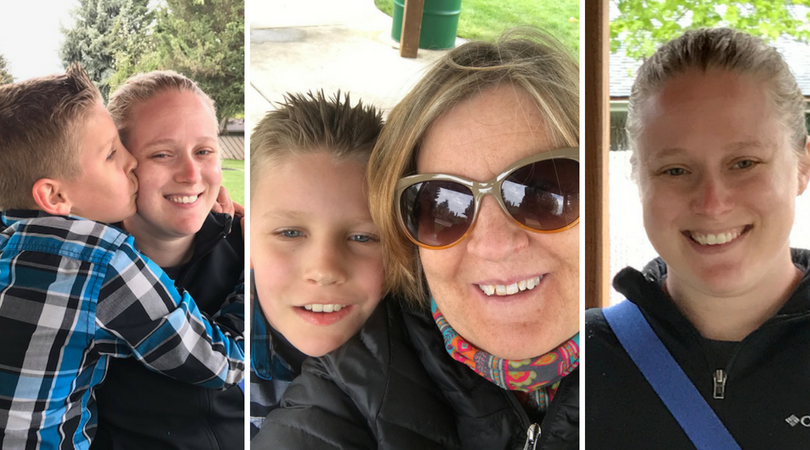
    Now that I am a grandparent, I want something different for my 9-year-old grandson. I want to do better. I want to make sure he is protected. I want to get it right for him.

    Last year, I invited my 28-year-old daughter (the mother of said 9-year-old grandson) to attend a free PROTECT OUR CHILDREN child abuse prevention training with me. She is a wonderful mom and I am very proud of her, but I wanted her to know and do more about child abuse than I did as her mother. I wanted her to be better informed than I was.

    The two of us set down together at a free training at the Medford library — on behalf of this little boy we both love — learning how to keep him safe. Then we had a nice dinner out and talked about what we had learned. It was truly bonding. (I always tear up when I think or talk about it.)

    Soon after the training, I saw my daughter putting her training into practice by being an “active bystander” and reassuring a friend who had made a report of abuse that she had “done the right thing.”

    She was not only able to know how to protect her child, she was vigilantly caring for other kids around her.   

    Grandparents! We know your adult/parent children are crazy busy — but grab them and take them to a child abuse prevention training with you or babysit for the grand kids while they take a training.

    If you haven’t taken the training yourself, schedule a time to do that. YOU can be an active bystander by learning how to protect your grand kids, knowing the signs of abuse and knowing how to react responsibly if you suspect abuse.

    The fact is that many sexually abused children (possibly your grandchildren) will suffer trauma severe enough to negatively impact their adult lives. They are 3X more likely to abuse drugs or alcohol and 2x more likely to drop out of school.   

    We may be older, but going forward and armed with knowledge of the true threat, we must do better for our grandchildren. As active bystanders, we truly can be a powerful force for good in the lives of the children of our community and future generations.

    You can find out more and sign up for the FREE Protect Our Children training here: http://cacjc.org/trainings


  • Back to School for ALL the Family

    By Ginny Sagal

    September is here and school has started for many kids and teens in our area.

    For some it will be the first time that you will be leaving your child with another adult. For some it might be a new school, new teachers or new sports coach.

    As your children start the new school year learning and exploring — you as the adult can learn too.

    Learn how to protect your child from sexual abuse.

    Learn the Facts

    1 in 10 children are sexually abused before age 18. Over 90% of them know their abuser.

    Minimize Opportunity

    Decrease the risk of abuse by eliminating or reducing isolated one-on-one situations.

    Talk About It

    Have age appropriate, open conversations about our bodies, sex and boundaries.

    Recognize the Signs

    Signs of abuse aren’t always obvious. They are there, but you have to know what to look for.

    React Responsibly

    How you react matters. Understand how to react to risky behavior, boundary violations, or suspicions, and when to make a report. 

    The Protect our Children Program teaches you all of this!

    Take 2 ½ hours of your time to protect the children in your lives. This is a free training given at the Children’s Advocacy Center of Jackson County once a month from 5:30 -8pm. Upcoming trainings at the CACJC are offered September 18th and October 16th. You can sign up here: http://cacjc.org/trainings


  • Are your kids safe at summer camp?

    By Leah Howell

    I have worked at summer camps for most of my career.  I started as a junior camp counselor, and over the course of high school, college, and graduate school found myself drawn to camp program management in the most beautiful of settings.  I completed my graduate thesis at a summer camp, and have never regretted contributing the majority of my time and efforts to concepts of leadership development, environmental conservation, and teamwork during these years.

    As the past Training Coordinator for a sexual abuse prevention program at the CAC, and learning about prevention as well as the prevalence of sexual abuse,  I recognize how inadequate the standard camp measures were in creating a flawlessly safe environment for youth.  As Camp Counselors, Program Directors and Camp Administrators, safety was on our radar – we were keenly aware of the dangerous and overtly suspicious situations involving adults and youth.  However, looking back over the course of many years working and living at camps, I now more fully recognize the potentially compromising environments that exist in a youth camp setting. Consistent and costly changes to the camp’s physical environment, facilities, organizational processes and staff structures would have been needed to totally eliminate potentially harmful situations. I doubt much has changed in camp standards in the last 15 years.

    I do not say all this to scare you, Parents. Camp can be a wonderful enriching experience in a youth’s life. I only say this to communicate how crucial it is for you to get proactively involved to increase the protection of your kids.  I advise this not only as they go away to day camp or sleep away camp, but as they interact with organizations of all kinds.

    Here is some great advice from Dr. Jackie Humans, on how to best prevent, recognize and react to sexual abuse, which can be applied to all organizations that provide care for your child.

    “According to Psychology Today, adolescents account for approximately 50% of all sexual abuse.  Unfortunately, summer camp is an ideal place for abusers; in recent years, sexual abuse has occurred at Christian camps, publicly funded camps, Boy Scout camps, and even the camp run by the school President Obama’s daughters attend.  While no camp is immune from the possibility of sexual abuse, there are five important steps parents can take to prevent their child from becoming a victim of abuse.

    1. Educate about body parts

    When teaching your child the names of body parts, use the proper terms for penis, scrotum, vagina and anus. The use of euphemisms can jeopardize your child’s credibility should they someday need to report abuse. Explain that these parts of their body are very private, and that no one should be touching them there unless that person has a legitimate reason (e.g., a pediatrician or early child care provider).

    Because every child molester asks their victims to keep the abuse between the two of them, teach your child that it’s never okay to keep a secret (unless it has an ‘expiration’ date, such as a surprise party) and that if someone touches their private parts they need to tell you or another adult (many camps forbid cell phones) immediately; and to keep telling until they get help.

    Even if someone just makes them feel uncomfortable or creepy when they’re nearby, they need to report it.

    Make it clear that no matter what another child or adult may tell them, they will never get into trouble for reporting.

    Lastly, move heaven and earth to make sure that no adult is ever allowed to be alone with your child. The only way abusers can do what they do is by having uninterrupted, private access to a child.

    1. Screen the camp

    It is important for parents to know that the camp has policies and procedures in place to minimize the risk of sexual abuse. Parents should ask the following questions:

    Are criminal background checks (including the sex offenders registry) performed on all personnel? How many references does the camp require, and how does the camp check them?

    What training do staff members receive about child sexual abuse?

    How are campers made aware of what to do if they feel unsafe?

    Under what circumstances are staff members allowed to be alone with a camper? (The answer needs to be: NONE!)

    How does the camp monitor behavior of older campers with their younger peers?

    Are at least two adult counselors assigned to sleep in each cabin?

    Who is responsible for enforcing camp rules and regulations?

    1. Recognize potential abusers

    The Center for Disease Control and Prevention reported in 2005 that 1 in 6 boys and 1 in 4 girls are sexually assaulted before the age of 18. The vast majority of abusers (90%) are male, and 71% of the time, the abuser knows the victim.

    Whenever someone seems to be overly interested in your child, beware. Camps routinely forbid their counselors to babysit or spend time with campers outside camp precisely because a counselor who has had the opportunity to develop a close relationship with your child is in a position to have an undue amount of influence. Sexual predators tend to be masters at “grooming” their victims by insinuating themselves into their victim’s life and becoming someone the child likes and trusts.

    What many parents don’t realize is that almost a third of sexually abused children are victimized by an older child. That’s why it’s important to know what the camp’s policies are regarding how much contact is permitted between different age groups and how well supervised the groups are.

    1. Know the warning signs of sexual abuse

    Warning signs of sexual abuse in younger children:

    Trouble walking or sitting

    Precocious awareness of sexual topics

    Seductive behavior

    Unprecedented shyness about getting undressed

    Avoiding a specific individual for no apparent reason

    Sleep disturbances

    Bedwetting or soiling

    Expressing concern about genitalia

    Reluctance to go back to camp

    Warning signs of sexual abuse in older children:

    Unusual interest in or avoidance of sexual topics

    Depression or suicidal thoughts

    Self-isolation/emotional aloofness

    Hostility or aggressive behavior

    Secretiveness

    Seductive behavior

    Sleep disturbances

    Substance abuse

    Reluctance to go back to camp

    1. Know what to do if you suspect abuse

    Support your child: Research shows that the single most important factor in a child’s doing well after being abused is the steady emotional support of their parents. First and foremost, keep your true feelings hidden and remain calm and collected. It’s the most courageous and kindest thing you can do for your child.

    Explain that abuse is never, ever their fault.  Many times victims of child sexual abuse will wait years or decades before revealing what happened, and even then it’s usually only to their therapist. When asked why they never reported the abuse as a child, patients admit that sometimes the sexual stimulation of their genitalia was pleasurable and they always believed this meant the abuse was partially their own fault. That’s why it’s critically important to explain to a child that the abuse is never, ever their fault, not even a little tiny bit, no matter what.

    Make sure they know you believe them. Some children never report sexual abuse because they fear they won’t be believed, especially when the abuser is known and trusted by the family. Tell your child you believe them; children rarely lie about having been sexually abused. Acting as though you might doubt your child will only compound the psychological damage sustained from having been abused.

    Praise them for sharing.  After your child has finished telling you what happened, praise them for confiding in you and let them know you realize it couldn’t have been easy. Then immediately notify the local authorities or call the National Child Abuse Hotline at 1.800.4.A.CHILD (1.800.422.4453)

    Minimizing the chances of abuse 

    Child molesters are adept at manipulating their victims into believing that the abuse is the child’s fault, that they won’t be believed if it’s reported, and that they or someone they love will get hurt if abuse gets reported. By letting your child know their private parts are off limits to others and that they will never get in trouble for reporting, that it’s never OK for someone to ask them to keep a “forever” secret, and by not allowing any adult to be alone with your child, you’re making your child far less vulnerable to predators who know how to exploit the naivete of children.

    Dr. Jackie Humans is a graduate of the Workplace Bullying Institute, the only organization in the United States that trains individuals how to present anti-bullying programs for bullying in the workplace. She also works with Child Abuse Prevention Services (CAPS), a nonprofit organization that sends volunteers into schools to present programs about keeping kids safe. She is a well-known speaker and program leader on subjects such as bully prevention, Internet safety, sexual harassment, date rape and child abuse, and the author of 15 Ways to ZAP a Bully!

  • All Adults are KEY to protecting our children from abuse

    All Adults are KEY to protecting our children from abuse

    By Tammi Pitzen, Executive Director of the Children’s Advocacy Center of Jackson County


    April is Child Abuse Awareness month.  I want to use this opportunity to talk to you about the unvarnished and raw truth about child abuse. 

    Generally, people do not like to talk about it.  I have been in meetings where we are talking about events for child abuse awareness and people do not want to talk about the non-sugar-coated version of this public health issue. It isn’t because people do not care.  I think it is because it is overwhelming.  I think it is because if you only look at the statistics and not the things you can do to prevent or intervene in abuse…. it is downright depressing.

    Here is the harsh reality….

    • 1 in 10 children will be sexually abused before their 18th birthday.  In an average classroom in the United States there are somewhere between 20 to 30 students.  That means in every classroom there are two to three children who have been sexually abused or who will be sexually abused
    • In our country, between 4 and 5 children every day die from child abuse or neglect.  That seems so high in a country as advanced as ours. 
    • In Jackson County in 2017 (the latest information that has been released) we have 850 confirmed victims of child abuse. 
    • In the state of Oregon in 2017 there were 30 children who died as a result of abuse or neglect.
    • We all want to believe (and I am right there with you all) that child abuse does not happen in our community, in our circle of friends or in our family.  But the statistics tell a different story.  There are reports made.  There are investigations initiated.  AND there are reports found to be true and backed up by evidence.

    Do you read those numbers and feel the same sense of urgency that I do to intervene…. to be a catalyst of change…. to be part of the tipping point? 

    These numbers are not just statistics.  They are children.  Every single number represents a child.

    You may be asking yourself…. what can one person do? I am so glad you asked. 

    We are the key to protection for children.  All of us.  Singularly and in groups.  We.  Together.  We are the solution.

    Here are some things that any of us can do to help prevent child abuse:

    1. You can take a class through the CAC’s Protect Our Children program to learn to recognize and respond to child sexual abuse.
    2. You can support the prevention efforts of your local CAC by donating precious time or financial support to their prevention programs.
    3. You can become a foster parent. While this is not primary prevention…. it certainly helps to break the cycle of abuse if we have good, stable, safe, homes to place children when they cannot remain at home.
    4. You can smile at a stressed-out Mom or Dad who is yelling or not treating a child in a way that is appropriate. And tell them what a beautiful child they have.  Believe it or not, it works.  I have tried this and, on occasion, the situation de-escalates pretty quickly.
    5. You can listen to and treat with respect your own children.
    6. You can talk to your children — both those who were born to you and those who are in your life — about body safety, about consent, and about what “no” means.
    7. You can be present in your child’s life by knowing who is in his/her life and setting rules about who can have access to him/her.
    8. Become a volunteer facilitator for the CAC Protect Our Children program.
    9. Do not be a bystander when you see a child being hurt or mistreated. Make a report.
    10. If a child says that someone is hurting them, respond by making a report, by reassuring them, by believing them, and by thanking them for trusting you.
    11. Get involved with the issue. Volunteer at the CAC.  Volunteer at another child serving agency. 
    12. TALK ABOUT ABUSE. Break the silence.
    13. Stop stigmatizing the issue and the children that are at the heart of the issue. If a child could make it stop…. they would.  The issues lie with the adults and not with the child.
    14. If you see a child that is disruptive and not pleasant to be around, remember that they may just be trying to survive. Offer them kindness instead of judgement.
    15. Be present in your child’s life.

    If you want to get involved by volunteering at the CAC either in our programming, as a facilitator of Protect Our Children or in support of Protect Our Children classes, please contact Danae Crawford, our Volunteer Coordinator at 541-734-5437 Ext. 1013.


    Tammi Pitzen
  • Which do you choose? Action or Silence


    By Tammi Pitzen, Executive Director of the Children’s Advocacy Center of Jackson County

    Have any of you been following the R Kelly sexual abuse scandal?  I have to say that even though I have heard a lot of things in my career some of this is just down right unbelievable.  But I somehow believe it!

    Let’s look at what has been reported.

    In 2002 R Kelly was arrested on 21 counts of child pornography.  In a report he is quoted as saying in an interview “There’s things that people have done in their lives that they regret, and I’m no different,” he told MTV News last month. “I’m a human being, and I want people to know that I’m no angel here, but I’m no monster either. I’m no guy that would do this.” In this case he was acquitted.  His attorney in that case later said he believed his client was guilty. 

    Fast forward to 2019.  He uses language like “I beat my case in 2002 and you can’t double-jeopardy me like that”.  If you were innocent would you say I beat my case or would you say I was innocent and that was proven?  In this same interview he blames his victims’ parents saying they sold their daughters to me. 

    So far I am not convinced he is innocent.  So far I am convinced based on his language and his words that he is guilty.  I haven’t even read the allegations until today.  I am solely basing my opinion based on the very words he used in his interview on national TV.

    In his interview, he is doing what many sex offenders do.  He is minimizing his criminal behavior. He is laying blame for his behavior on others.  He is of course trying to convince us all that he is no monster, therefore he could not be guilty.  He is playing the victim in all of this.  He is trying to convince us how utterly incredulous it would be for him to hold anyone captive…to sexually abuse anyone.  He is R Kelly after all.  Why would he have to?  Well.  The answer to that last one is that he wouldn’t have to at all.  But that does not answer whether or not he did.

    R Kelly is not even someone we can say is very nice.  He has to make a lot of money but chose not to pay his child support.  His ex-wife says he was domestically violent with her.  He married Aaliya when she was 15 and he was 27.

    All the information above was gathered out of listening to R Kelly’s own words and the words of those who were or are close to him.  None of it is from the victim’s voice.  And to be clear…I do understand that anyone can say anything and that does not make it true.  However, the sheer number of voices in this case certainly has to mean something. 

    The victim’s stories are similar.  R Kelly was controlling.  They were underage when their “relationship” started.    They would sometimes be locked in a room.  Some say he would video record their sexual acts.  Others used words like submitted to having sex with him.  He would control who they were allowed to speak with.  As I sifted through their stories, they all rang true to me. 

    Some would be put off by the similarities, but for me that seems right.  Sexual predators have routines…have modus operandi if you will.  Some traits that are common for sexual offenders include, but are not limited to: engaging in sexual contact with children or adolescents, having sexual contact with others against their will or without consent, humiliation of others, inflicting pain on others, participating in or watching acts of physical aggression or violence, “thinking errors”, and isolating their victims. 

    Thinking errors in this particular reference refer to things that sex offenders say to themselves and to others to justify their actions.  (Example:  I didn’t mean to sexual abuse her, but she came on to me — she forced me to do it — and the her/she referenced is six years-old at the time.)

    I wonder what makes this time around different from 2002.  I wonder if this time will have different outcomes for R Kelly.  I worry that there will be no accountability and this will turn into fodder for a Saturday Night Live shtick.  I worry for the young lady that is currently residing with him and out of contact with her family. What will happen to her?  What will be the long term outcomes for her if he is found guilty?  Or found not guilty?  I wonder about the many witnesses along the way that did not intervene or those that tried.  What are the outcomes for them? 

    I wonder where we go from here. Where do the victims go from here?  Will what happens next help them start healing or will it destroy them and their futures? 

    I wonder what messages our children are receiving as this unfolds.  I wonder what messages future victims are hearing.  Are they messages that will support them coming forward and reporting?  Or will they accept their abuse as fate?

    We don’t need to be powerless. 

    We can safely intervene by reporting what we suspect when we suspect to the authorities.  When someone discloses abuse to us, we can tell them we believe them.  We can take a class through the Children’s Advocacy Center of Jackson County’s Protect Our Children program and learn how to recognize and respond to sexual abuse.  We can support the work of organizations like the Children’s Advocacy Center of Jackson County by being a financial supporter or volunteering our time.  We can speak out and step out in support of child abuse victims.  We can demand accountability for offenders of child abuse. 

    Or we can join the silence that infiltrates the underworld that is child sexual abuse.


    Tammi Pitzen


  • Silent promises to my friend, Wendy

    By Tammi Pitzen, Executive Director of The Children’s Advocacy Center of Jackson County

    I have been wanting to write this post for a long time.  I asked the person who is at the heart of this story – twice — if it was okay.  I have sat down hundreds of times trying to get started and was never able to get past the first sentence or two. I have touched on it a time or two in other posts. 

    But it’s time to pay tribute to my friend and own up to my own shortcomings.

    Some of you know that I started my career in child protection in the same very small town that I grew up in and where I graduated high school.  Inherently, that means that I crossed paths with many people that I knew while investigating child abuse cases.  Some impacted me.  And, ironically, the one that impacted me the most was not one that I was investigating. 

    To tell the whole story, I need to go back to the beginning. 

    I don’t know when I first met Wendy, but I know that I have known her more than half my life now.  My first really clear memories were in middle school.  She lived with her brother and her dad.  I never knew what happened to her mom or why she was not in the picture.  She and I talked some, but not a lot.  She and I went to the same church.   I am ashamed to say that I never asked her anything.  I suspect if I did, she and I would have found that we had some things in common — like our dry sense of humor, fierce loyalty, a desire to help people, some insecurities about who we were and dreams of living in places far away from our small hometown.  I also would have found out that we had things that were very different about our lives.

    All during this time, there were rumors or concerns whirling around of Wendy being abused.

    I remember the adults trying to be kind to her.  Looking back at it now, I wonder how that felt.  Being kind does not make the abuse stop. I think that people shied away from Wendy because of believing she was abused.  As if somehow it was “catching”. 

    I remember hearing some of the adults talk about how there was something not right about Wendy’s relationship with her dad.  I didn’t know a lot about abuse when I was in high school.  I was so busy trying to survive, that I doubt I looked around to see anyone else’s struggles. 

    As an adult looking back, I feel guilty.

    We graduated high school.  I went to college.  I am not sure where Wendy went.  She got pregnant in high school during a time that it was not as accepted as it is today.  She gave the baby up for adoption. Some thought that was for the best.  Our worlds went down different paths for a while.  I graduated from college and went back to this same small town to start my career.  I started investigating child abuse reports for the Department of Social Services. 

    I had been there for a couple of years.  I had not run into Wendy. If I am honest, I doubt I thought much about Wendy.  Then one day, I was in the record room at work and came across a file that had her dad’s name on it.  We were purging files.  I had gone in to get more files to start working on. 

    I stared at that file for what seemed like eternity.  Sitting on the shelf.  Wondering what I should do. 

    My eyes starting to sting, and my heart started to race.  I am pretty sure I sobbed.  I couldn’t even bring myself to pull the record off the shelf. I stood there staring at it.  It seemed too intensely personal.   It felt like time had stopped.  I am sure it was only a matter of seconds. 

    My co-worker came in … grabbed the file and went back into the area where we were working.  I pulled myself together and grabbed the next few files and went back to my seat.   My co-worker asked if I was okay.  She said I looked like I was not feeling well.  I pulled myself together and continued working.

    I never read the file.  I never checked to see if there was anything left after we purged some things that the state had decided needed to be destroyed.  While I never read it, I never forgot and would find myself thinking about Wendy from time to time.

    And then Facebook came on scene.  I got a friend request from Wendy.  We reconnected through the world of social media.  I learned that Wendy’s life had not always been easy, but Wendy persevered.

    Wendy was abused. 

    Wendy was physically, sexually, and mentally abused, as well as, chronically neglected as a child. 

    Reports were made, but she never felt safe to tell anyone. They would come to her house to interview her with her Dad in the next room.  She shared with me that she had four different family members abuse her.  It hurts my heart to think about it.  But Wendy was and is resilient.  Wendy made promises to herself and to her children.

    Wendy went to college.  She first got her associates and bachelor’s degree in Psychology and then got her masters in Health Care Management. 

    Wendy did indeed survive her childhood home and has been able to pick up those pieces of herself that were shattered by abuse and put them back together.  She is one of the most resilient people I know.

    I did not know enough to help Wendy when I was a teenager.  When I found out that Wendy had been abused or got confirmation, I replayed a lot of my childhood in my mind. 

    I sat at my computer and cried that I had not been able to help Wendy thirty something years ago.

    I tell this story not to garner sympathy for Wendy or for me.  Not to illustrate my failure to protect or even be a good friend.  I tell this story to show that abuse is out there, and it is close to us.  It always has been.  

    I tell this story because I wonder if there had been a Children’s Advocacy Center to go to, she would have felt safe, and if some of her abuse would have been prevented, and if some of her struggles could have been lightened.

    I felt powerless, frightened and too ignorant on child abuse to intervene way back then, but I have promises to keep…no more excuses. 

    I made it my life’s work to intervene—to do something to stop adults from abusing children.  I never intended to stay in this work for this long.  I had other plans.  However, sitting in a small records room in Louisiana, I was persuaded to continue until I could continue no more. 

    I made some silent promises to Wendy that day. 

    I promised to always make a report if I suspect abuse.  I will never turn away again.  I promised to not be afraid to ask if something doesn’t seem quite right.  I promised never to allow a “whatever happens in the family is not my business” mentality to prevail.  I promised to always intervene on behalf of a child. 

    I have been working and advocating on behalf of abused children for 29 years.  There have been many moments that have inspired me to continue, but they all started with a few silent promises to my friend Wendy. 

    I bet that the majority of you have a Wendy in your life.  Even if you don’t know who they are.  Statistically, there is no way you don’t have a Wendy in your life. 

    I want to ask you to do what you can to keep a child safe.  I want to ask you to make a report to authorities when one needs to be made. 

    You will never regret making a report to keep a child safe, but you may regret not making one.

    Tammi Pitzen


  • A Bright Future

    By Claudia Cervantes, Protect Our Children Project Bilingual Training Coordinator

    Recently I attended the Regional Meeting of Coordinators of the Protect Our Children Project that took place in Eugene. It was a full day of inspiration and learning, and I can certainly say that after the first conference, I was not the same person.

    Now I am someone with a new hope filling my heart: Resilience.

    We can all heal and overcome the traumas that we experienced in our childhood and live a life with meaning, with purpose.

    Doctor and therapist, Amy Stoeber, spoke about the adverse experiences in childhood (ACEs) and how they can be treated through an Education for Resilience. We are all born with the ability to be resilient. That means we are born with the ability to overcome the traumas we experienced in childhood and face life developing our strengths. And although this is a natural skill,  “Resilience can be taught, modeled and improved,” says Doctor Stoeber.

    Through new routines, the brains of children and adolescents are modified and new connections are built in the brain structure to develop new behaviors and abilities.

    If adults promote the ability to be resilient, children and adolescents can develop skills of social competence, autonomy, problem solving, a sense of purpose and a belief in a bright future.

    But, how to obtain positive results in an education for resilience?

    Here I share some ideas of Dr. Stoeber for creating  a support system when promoting education to improve resilience in children:

    On the part of the parents:

    Unconditional love. Remind your son or daughter that you love them no matter what happens or what they do.

    • Model the behaviors that are expected. Look them in the eyes, do not lie, hug, be orderly, respectful, and kind.

    On the part of the professionals (teachers, therapists, other adults in professional roles.)

    •  Communicate without judging. Parents and children should feel that the support people are not there to judge them.

    We are a team. The goals we want to achieve are established together – through a language that implies an “us”.

    Dr. Stoeber also shared some ideas about how to spend time with your children and help them develop Resilience. She suggests spending 10 minutes a day, three times a week, avoiding all distractions such as cell phone use and letting your son or daughter choose a game or activity.

    Here’s idea for one game to play with your children: “I love you no matter what.”

    I played this game with my nine-year-old daughter and asked, “Do you love me even if I do not cook quesadillas every day?” And she told me, “Yes mom, I love you anyways.” And then she asked me, “Do you love me even though sometimes I get mad?” And I said, “Yes, I love you no matter what.”


  • Un futuro brillante

    By Claudia Cervantes, Bilingual Training Coordinator for the Protect Our Children Project

    Recientemente asistí al Encuentro Regional de Coordinadores del Proyecto Protegiendo a Nuestros Niños que tuvo lugar en Eugene. Fue un día completo de inspiración y aprendizaje, y sin duda puedo puedo decir que después de la primera conferencia, yo ya no era la misma persona, ahora era alguien con una nueva esperanza que llenaba mi corazón: Resiliencia. Todos podemos sanar y superar los traumas que vivimos en nuestra niñez y vivir una vida con sentido, con propósito.

    La doctora y terapeuta Amy Stoeber, habló sobre las experiencias adversas en la infancia y como pueden ser tratadas a través de una Educación para la Resiliencia. Todos nacemos con la habilidad de ser resilientes, eso significa que nacemos con la capacidad de superar los traumas vividos en la niñez y enfrentar la vida desarrollando nuestras fortalezas. Y aunque esta es una habilidad nata, también “La resiliencia puede ser enseñada, modelada y mejorada”, dice la doctora.

    A través de nuevas rutinas, el cerebro de los niños y adolescentes se modifica y se construyen nuevas conexiones en la estructura cerebral para desarrollar nuevos comportamientos y habilidades.

    Si los adultos promovemos la habilidad de resiliencia, los niños y adolescentes pueden desarrollar capacidades de competencia social, autonomía, solución de problemas, un sentido de propósito y la creencia en un futuro brillante.

    Pero, ¿Cómo obtener resultados positivos en una educación para la resiliencia? Aquí les comparto algunas ideas de la doctora Amy en la creación de un sistema de apoyo a la hora de promover una educación para mejorar la resiliencia en niños:

    Por parte de los padres:

    • Amor incondicional. Recordar a tu hijo o hija que los amas pase lo que pase y haga lo que haga.
    • Modelar las conductas que se esperan. Hablar con tu hijo o hija  con atención, mirarle a los ojos,  no mentirle, abrazarlos, ser ordenado, respetuoso, amable.

    Por parte de los profesionistas (maestros, terapeutas, otros adultos que ayudan al recibir ayuda profesional)

    • Comunicación en una postura sin juzgar. Los padres y niños deben sentir que las personas de apoyo no están ahí para juzgarlos.
    • Somos un equipo: Las metas que se quieren lograr se establecen en conjunto. A través de un lenguaje que implique un “nosotros”.

    Ideas para pasar tiempo con tus hijos y ayudar a desarrollar Resiliencia. La doctora sugiere pasar 10 minutos al día tres veces a la semana, evitando todas las distracciones como el uso del celular y dejando que tu hijo o hija elija un juego o actividad. Les comparto uno de los juegos propuestos en la conferencia:

    • “Te amo sin importar que…” Yo jugue este juego con mi hija de nueve años  y le pregunte: “¿Me quieres aunque no cocine quesadillas todos los días? Y ella me dijo, si mama, de todos modos te quiero. Y luego ella me pregunto, Y tu ¿me quieres aunque a veces me enoje? Y yo le dije, si, te quiero de todas formas sin importar que.


    Claudia Cervantes
  • Today. Right Now. I Am Hopeful.

    Today. Right Now. I Am Hopeful.

    By Tammi Pitzen, Executive Director of the Children’s Advocacy Center of Jackson County

    As I sat down to write this blog, I sort of hit a mental block about what I wanted to talk about.  Not something that happens to me frequently.  Ask my husband and he will tell you I am a woman of many words.  I am not speechless often. 

    I feel like this blog has always been a place that was politics free and I want to keep it that way.  So I am trying to choose my words carefully.  There is a lot that is happening in politics and on the national platform in regards to a subject matter that is connected to my life’s work.  Sexual assault.

    Okay.  I put the words out there.

    Let me start by saying what this blog will not be about.  It will not be about whether or not to believe the current accusations that have been displayed at the national level.  There are tons of commentary out there about that.  I doubt there is one original new thought that could be floated out there.  It will not be about whether or not a certain person should be confirmed on the Supreme Court or not.  That matter has been settled.  It will not be about whether my son is at risk for accusations of sexual assault in the future.  It will not be about the Me Too movement or the Him Too Movement.  It will not be about the trauma that has been caused to victims….both those who have disclosed and those who have yet to disclose their abuse….in recent weeks by candor on both sides of the aisle.

    THIS blog is about celebrating a moment in time that many would have laid odds would never happen in our lifetime. 

    THIS blog is about celebrating a shattering of the silence. 

    THIS blog is about letting go of the shame that has enveloped victims of sexual assault since the beginning of time.

    No matter what your political or religious beliefs are, or what your view points or judgements about how a victim should act or report….you have to admit that the discussion of sexual assault and support of victims has never been so open, so public, so impactful, so front and center before. 

    For the first time in my recollection, the discussion has shifted from victims should never talk about it—should not report it — to a discussion about how and when they should report it.  Maybe a more appropriate word is judgement.  BUT my POINT is that WE are talking about it at every level.  We are hashing out what our beliefs and values about the subject of sexual assault are.  WE are talking about what should be acceptable. 

    For a woman who has always been a “glass half full” kind of a girl, this is progress.  I hear many of my friends and read many Facebook posts about how depressed and distressed they are about political agendas and the fate of sexual assault victims and how women are treated. 

    And in the midst of it all, I find myself hopeful.  Yes.  Hopeful. 

    Women and men alike are admitting that, no matter what was decided through the “Women’s Suffrage Movement”, men and women are not treated equally and do not live a life of equality.  Women may be closer to equal pay.  They have fought and earned many rights that were “birth given” to men like the right to vote.  Statistically speaking, women have to work harder, longer, and more consistently for leadership positions in the work force–most of the time.  All of this is old news. 

    But one thing that is now becoming more apparent is how women have to be vigilant about their personal safety.  I doubt my mother ever told my brother to never leave with a girl without a dime, in case he got in trouble and needed to call from a payphone. (I am aware I am very much dating myself here, but let’s go with it.) 

    I would bet that most men do not pay attention to where the lighted parking spots are in relation to the security cameras and the main doors when parking anywhere.  I say most.  There would be some who do. 

    I wonder how many men have practiced how to hold their keys in their hand should they need to use it as a weapon.  I wonder how many men pause when coming out of the Mall to watch their vehicle a bit before heading out to get in.

    I wonder how many men ponder whether or not it is safe to get in the elevator when there is only one other person on it. 

    I won’t belabor this point much more except to say that now I have had, heard about or eavesdropped on many discussions about the differences in how most men and women live their life.  I call that progress. 

    I call that hopeful.

    Never in history has sexual assault been the topic on the national platform for as long, with as much emotion, and with as much detail as it has in recent months. 

    I call that hopeful.

    I cannot recall in my lifetime ever having so many unite in support of victims of sexual assault.  I cannot recall in my lifetime so many people vested in justice before. 

    I call that hopeful.

    We have reached a tipping point.  A saturation of awareness.  Do I feel like we have much more to go?  More progress to be made?  Absolutely.  Do I recognize there is still way too much judgement of how a victim is supposed to act?  Of course.

    But today.  Right now.  I am feeling hopeful.  Hopeful that this is the start of something big.  Hopeful that there will come a point in time where we can agree that there is no shame for the victim of sexual assault.  

    A time when we agree that no matter what you wear….no matter how much you drink… no matter if you stay out past midnight….no matter what anyone does…. none of it is consent unless you both wholeheartedly say yes to sexual contact.  There is no implied consent.  And even if we can’t agree on that….we are at least having discussions about why we disagree in order to better understand what is reality.

    We should all be able to agree that in recent history no one really talked about, did as much research into, reported about, or thought about sexual assault for as long or in as much detail.  

    This moment in time is historic.  It is hopeful.  It is a beginning. 

    Tammi Pitzen