Blog

  • Thirty Stories from Thirty Years: Story Number 12

    By Tammi Pitzen, Executive Director of the Children’s Advocacy Center of Jackson County

    Learning from the Past: Building a Culture of Self-Care

    This story is number twelve in Tammi’s series of Thirty Stories from Thirty Years working in child welfare.

    You can read all of the stories here.

    This series is a reflection over a 30 plus year career in child abuse interventions.  Some are stories that help to understand real life impacts of that career and vicarious trauma.  Some stories are just that.  Stories of pivotal moments in that career that propelled me to continue the work even when it seemed impossible. 

    This is story number twelve.

    Waiting For The World To Change

    I have been a music lover for most of my life. My taste in music is very eclectic. For me, it is about the memories, feelings, and emotions that are conjured up. I like everything from Reggae to Hip Hop, to Country to Rock to classical, and everything in between. Music helps to put my feelings in order. Music helps me to reconnect with the world. It has always been that way. My happy place, the place where I get re-centered, is sitting by water… preferably the ocean, and listening to music.

    Recently I have rediscovered “Waiting for the World to Change” by John Meyer. It resonates with me –particularly because of the work I have been doing for the last thirty-plus years. It is hard to not think about this song and think about the many children I have worked with or those I did not get the opportunity to work with who are just waiting for the world to change. When I started this work more than 33 years ago, I had a few goals. To change the world. To change my corner of the world. To make my community a little better, a little kinder, a little safer.

    As an adult who has spent the majority if not all my life living in a safe abuse-free world, I am struck by how I have the luxury of being able to wait for the world to change. I can wait. There is no urgency for me as far as my personal life goes. I was not abused as a child. I have a spouse that does not hit me. I was well cared for by my parents and my family. I had my basic needs met. I still have my basic needs met.

    But when I think about the children who are experiencing abuse and think about the stories of the children who I have been so lucky to work with over my career it makes my heart hurt a little bit. My heart hurts for the hundreds of children who never find the opportunity to find safety. Who never feel safe to disclose their abuse.

    My heart aches for the child who told me she had told someone six months ago about what happened and had been waiting for someone to help her. She had been sexually abused by her stepfather and was scared. She told me how she tried different things to make the abuse stop. She thought if she could change something in her life or his the abuse would stop.

    My heart aches for the young adolescent boy whom I went out to follow up on a report called in over the weekend who came running out to my car as I arrived with two black eyes, a broken nose, and a broken arm that was the result of his dad abusing him. He came running to my car with frightened eyes but a wide smile. “I knew something would happen! I knew someone would help me!”

    Those children and their siblings were waiting for something to happen…for something to change in their world that would help them be safe and free from abuse. Someone called in a report. An emergency room doctor did not believe the stories being told to them. A teacher saw behavioral changes in her student and reported her concerns.

    “Me and all my friends
    We’re all misunderstood
    They say we stand for nothing, and
    There’s no way we ever could”

    “Now we see everything that’s going wrong
    With the world ….We just feel like we don’t have the means
    To rise above and beat it”

    “It’s not that we don’t care
    We just know that the fight ain’t fair
    So we keep on waiting (waiting)
    Waiting on the world to change”

    “So we keep on waiting (waiting)
    Waiting on the world to change
    We keep on waiting (waiting)
    Waiting on the world to change”

    “It’s hard to be persistent
    When we’re standing at a distance
    So we keep on waiting (waiting)
    Waiting on the world to change”

    Through the eyes of the children in our world experiencing abuse, this song takes on new meaning. It becomes an anthem. These children do not have the time to wait. It seems dramatic but I guess it kind of is. The luxury of being patient for the world to change does not exist for these kids—for the kids who are experiencing abuse—for the kids struggling to survive. According to the Centers for Disease Control and Prevention, the United States has one of the worst records among industrialized nations – losing on average between 4 to 7 children every day to child abuse and neglect. In our country, 4 to 7 children die as a result of abuse and neglect. Those children died waiting for the world to change. It seems dramatic because it is dramatic!

    That young adolescent boy with black eyes, a broken nose, and a broken arm—later tracked me down long after I had worked with his family. He expressed how he knew things were going to get better when he saw me that very first day when I arrived at his home. I was 22 years old when I first met this child. I don’t remember much about that day. I don’t remember how things transpired. We didn’t have cell phones. I was out in the middle of nowhere with no way to call my supervisor or a judge. I had to drive 30 to 45 minutes back to the office to get an order to go back and pick up him and his 4 siblings. I don’t remember any of that. I remember the panic I felt when I realized I was going to have to leave this child and hope when I came back that no one was hurt further. I remember the anger I felt that he was left for the weekend to survive. I remember the gratitude that none of the kids had been hurt further while they waited. I remember wondering how long they had to wait for something to happen that was “enough” to act to provide safety. I remember crying in my car on the way home that night.

    The work we do today on behalf of children who experience abuse changes all of our world tomorrow. We are not powerless. Child abuse happens in silence and isolation. It isn’t visible in our everyday life like many other public health issues. If we want substance abuse rates to come down, we have to stop waiting for the world to change. If we want the homeless rates to come down, we have to stop waiting for the world to change. If we want suicide rates to come down, we have to stop waiting for the world to change. If we want domestic violence rates to come down, we have to stop waiting for the world to change. We know the answer. We know how to change the world for these children, ourselves, and our community. The Adverse Childhood Experiences Study tells us. There are high correlations between these social issues, many chronic health issues many mental health issues, and early childhood trauma like abuse left without intervention. We know that by intervening early and close to the event that caused the trauma (abuse) we can mitigate lifetime impacts. When we take into consideration social determinants of health and use the interventions we know to be effective in transforming trauma into healing we ARE changing the world.

    What are you waiting for? We all can do something. We all can do one thing to change the world. One person doesn’t have to do it all. But each person can do something. It can be to volunteer at an organization that serves children who have experienced abuse, like the Children’s Advocacy Center of Jackson County. It can be to provide an investment or financial gift to support the work being done on behalf of children who experience abuse, like the Children’s Advocacy Center of Jackson County. It can be to call the child abuse hotline when you see or hear something about a child being hurt through abuse. You can listen to a child when they tell you they feel uncomfortable around another adult or child. You can pay attention to the physical signs of a child being hurt and act by making a report to the child abuse hotline. You can help provide support and gratitude to the many men and women who work tirelessly every single day to help children find safety and justice after abuse. The list is endless. The possibilities of how you can help are limitless. All these things help to make the vision of communities where children are safe and families are strong a reality.

    Why are you still waiting for the world to change? YOU have the POWER to CHANGE the WORLD.

    This is story #12 in Tammi Pitzen’s series of 30 stories from her 30 years working in child welfare.

    You can read all the stories here.

    #ThirtyStoriesFromThirtyYears #ThirtyFromThirty #ACareerInChildProtection

  • The Advocate Newsletter: March, 2024

    The Advocate Newsletter: March, 2024

    The Advocate Newsletter

    March, 2024

    Welcome to the latest edition of our newsletter, where every story, every word, and every effort is dedicated to championing the rights and well-being of the most precious members of our community – our children. At the Children’s Advocacy Center of Jackson County, we stand as a beacon of hope, compassion, and unwavering support for those who need it most. Join us as we continue our journey of advocacy, empowerment, and healing for every child in need.

    Executive Director

    Picture of Executive Director Tammi Pitzen

    “Be the change you want to see!”

    Continuing the Vision:

    A Message from Our Executive Director

    Dear Community Members, 

    As we reflect on the past year, I am filled with gratitude for the resilience and dedication our team has shown in providing essential services to children and families affected by abuse. Our unwavering commitment to ensuring that every child in our community who experiences abuse receives the comprehensive care and support they deserve has never been stronger. 

    A cornerstone of the Children’s Advocacy Center (CAC) is our forensic interviewing service. Our interviewers, trained in developmentally appropriate techniques, conduct interviews with children who have faced abuse. These interviews are vital for gathering crucial information in a manner that is both accurate and sensitive, aimed at minimizing additional trauma to the child. 

    Beyond forensic interviewing, our suite of support services encompasses advocacy, mental health counseling, medical evaluations, and connections to other community resources. Our holistic approach is designed to meet the physical, emotional, and psychological needs of the children we serve, ensuring they receive the comprehensive care necessary for healing and recovery. 

    In 2023, we provided over 5,000 services to 620 children, a testament to our ongoing commitment to deliver trauma-informed, evidence-based, and professional interventions. These services are crucial for helping children and their families navigate the challenging journey from trauma to healing, underscoring the importance of coordinated support from dedicated professionals at the CAC. 

    Child abuse is not just an individual issue but a community-wide challenge that requires a united response. We are profoundly grateful for the unwavering support from our community, which enables us to offer hope and healing to the children we serve. Your support is the backbone of our mission, and together, we make a significant impact on the lives of those affected by child abuse. 

    Thank you for standing with us as we continue our vision of a community where every child is safe, valued, and heard. 

    With heartfelt appreciation, 

    Tammi Pitzen 

    CACJC Executive Director 

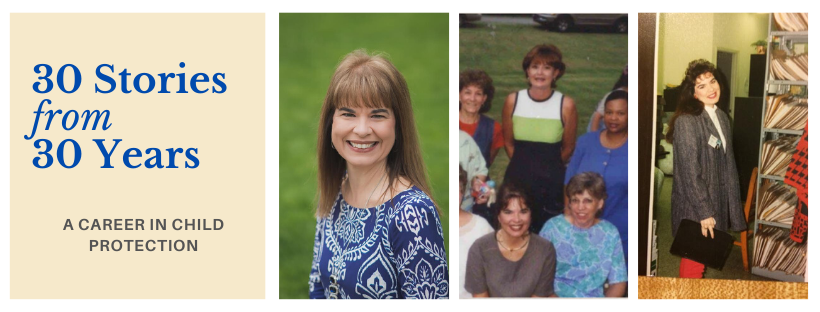
    30 Stories from 30 Years

    A Tammi Pitzen Blog

    Thirty Stories from Thirty Years: Story Number 9

    By Tammi Pitzen, Executive Director of the Children’s Advocacy Center of Jackson County Working Together to Do No Harm This story is #9 in Tammi Pitzen’s series of 30 Stories from her 30 years working in child welfare. You can read all the stories here. This series is a reflection

    Read More »

    Thirty Stories from Thirty Years: Story Number 8

    By Tammi Pitzen, Executive Director of the Children’s Advocacy Center of Jackson County Lessons Learned from an Unexpected Teacher This story is #8 in Tammi Pitzen’s series of 30 Stories from her 30 years working in child welfare. You can read all the stories here. This series is a reflection

    Read More »

    Thirty Stories from Thirty Years: Story Number 7

    By Tammi Pitzen, Executive Director of the Children’s Advocacy Center of Jackson County Oh The Places You Will Go When You Know What You Won’t Do! This story is #7 in Tammi Pitzen’s series of 30 Stories from her 30 years working in child welfare. You can read all the

    Read More »

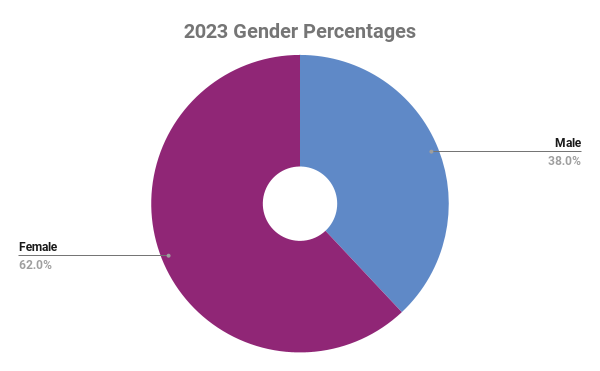
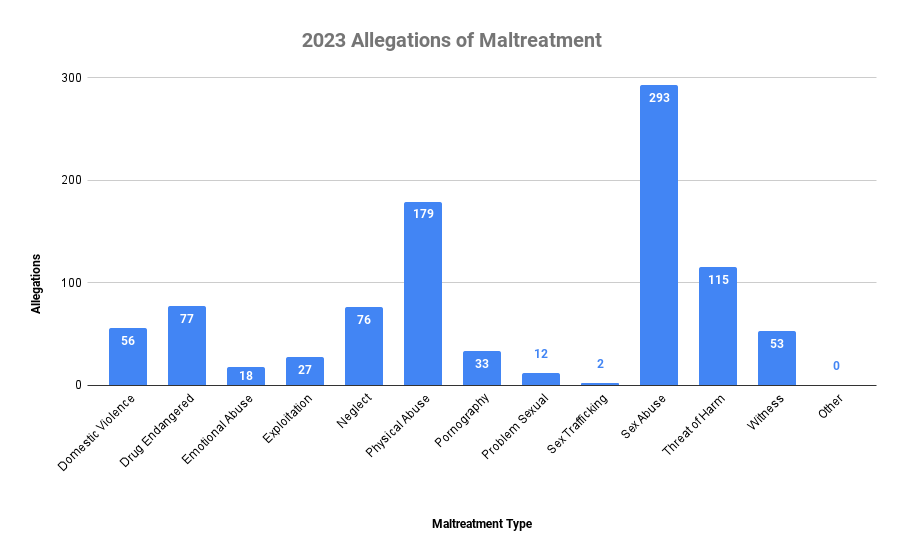
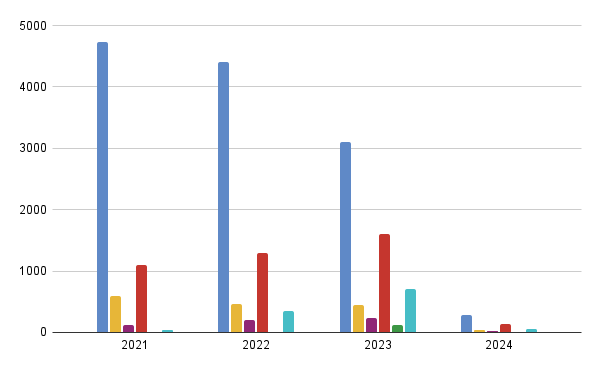
    2023 Statistics

    In 2023, our dedicated team at the Children’s Advocacy Center of Jackson County tirelessly worked to deliver essential services to children in need throughout our community. From advocacy and forensic interviews to medical care, mental health support, prevention training, and the comforting presence of our beloved program assistant dog, Fancy, each member of our team contributed their expertise and compassion to ensure that every child who entered our facility received the care and support they deserved. Together, we brought hope, healing, and a brighter future to many young lives, reaffirming our commitment to serving as a beacon of safety and support for our community’s most vulnerable members

    Services 2021-2024

    Year Advocacy Forensic Interviews Medical Services Mental Health Prevention Fancy Program Assistant Dog
    2021 4729 587 116 1096 32
    2022 4411 466 201 1296 343
    2023 3101 447 240 1608 123 710
    2024 288 35 17 131 62

    2024 Winter Gala: Under the Sea

    Thank you to everyone who joined us at the Children’s Advocacy Center 2024 Winter Gala: Under the Sea! It was a night filled with enchantment and community spirit. Guests were transported to an underwater wonderland at the Ashland Hills Hotel & Suites, where they enjoyed mesmerizing entertainment, delectable cuisine, and exciting auctions. Together, we celebrated the important work of the Children’s Advocacy Center and raised vital funds to support children and families in need. Your support makes a real difference, and we can’t wait to see you at our next event!

    Raised for Children’s Advocacy!
    $ 0 +
    Sponsors
    0
    Auction Items Sold
    0
    Attendees
    0

    Empowering Healing:

    Insights into CACJC’s Therapy Department

    At the Children Advocacy Center of Jackson County (CACJC), the heart of our mission lies in fostering support and healing to children who have faced trauma. Central to our mission is the Therapy Department, a team uniquely equipped to address the multifaceted needs of children and their caregivers following traumatic experiences, particularly those related to abuse. 

    Led by a dedicated team comprising therapists Andrew Fallman, Gaile Friend, Catherine Zern, therapy assistant Debbie Donahue, and the comforting presence of Fancy, the CAC Facility/Therapy Dog, our department is a haven for healing. We are committed to employing evidence-based, best practice treatments that have been rigorously normed and validated on abuse survivors, receiving endorsement from the National Children’s Alliance. 

    Our therapeutic journey begins with an in-depth, multi-session assessment that incorporates a variety of measures and interviews with both the child and their caregivers. This critical first step allows us to gather a holistic view of the child’s current state, including their symptoms, strengths, historical background, and specific needs, setting the stage for a personalized healing strategy. 

    A key element of our therapeutic approach is Trauma Focused Cognitive Behavior Therapy (TF-CBT), a model developed by Judith Cohen, Anthony Mannarino, and Esther Deblinger. TF-CBT is intricately designed for trauma survivors and their families, incorporating the following essential recovery components through the PRACTICE acronym: 

    • Parenting skills and psychoeducation about trauma 
    • Relaxation techniques, focusing on mindfulness and calming strategies 
    • Affect regulation for managing emotions 
    • Cognitive coping to explore the interplay between thoughts, feelings, and behaviors 
    • Trauma narrative, where children articulate their experiences within the broader context of their lives 
    • In vivo mastery over real-life triggers 
    • Conjoint sessions that include caregivers, emphasizing narrative sharing 
    • Enhancing safety through sex education, personal safety strategies, and self-assertion skills 

    Children navigate these recovery components using diverse modalities — including art, journaling, role play, sand play, movement, books, stories, and puppets — allowing their unique creativity and personality to enrich the healing process. 

    Understanding the pivotal role of caregivers, our Therapy Department also offers a six-week support group for non-offending caregivers of children who have suffered sexual abuse. This program addresses a broad spectrum of critical topics, such as self-care post-trauma, adverse childhood experiences and resilience, insights into the behaviors and treatments of offenders, symptoms of child sexual abuse, managing behaviors in traumatized children, and guidance on navigating the judicial system. 

    The CACJC Therapy Department is deeply committed to creating a supportive, nurturing environment that champions the recovery of every child and caregiver who enters our realm. Through our specialized therapy programs and steadfast support, we are dedicated to empowering survivors and their families on their path to healing and resilience. 

    By Catherine Zern, LCSW  

    Therapy Director 

    The CAC Medical Department is excited to announce the addition of Shireen Chamberland, MD to our team! Dr. Chamberland is a Family Medicine Physician and Southern Oregon native who has been practicing medicine in the Rogue Valley for almost 20 years. Dr. Chamberland brings with her years of clinical experience caring for children and young adults, along with a sincere passion for helping vulnerable children. She is deeply invested in our community, while parenting her four children, and coaching youth swimming. Dr. Natalya Miller will be relocating out of Oregon with her family this June but plans to remain in the role of CACJC Medical Director, working virtually alongside Dr. Chamberland to provide a consistent, coordinated, evidenced-based approach to child maltreatment cases.  

    In addition to expanding our Medical Team, the CACJC Pediatric Sexual Assault Nurse Examiner (PSANE) Program will be extending coverage to Asante Three Rivers Medical Center (ATRMC) in Grants Pass, OR. In partnership with the Asante Foundation, our team in Jackson County has been working closely with the physician leaders at ATRMC to make this possible. Our PSANE program, comprised of eight forensic nurses, has been responding to acute child sexual abuse cases that present to our local hospital Emergency Departments at Asante Rogue Regional Medical Center and Providence Medford Medical Center outside of CAC business hours, since 2018. The program has been critical in providing timely evaluations for sexually abused children in need of a specialized physical exam, DNA evidence collection, treatment, and testing. We have tremendous gratitude for the community partnerships that have made this program a sustainable response to a serious problem facing children in our community. 

    We continue to provide comprehensive services at the CAC, including medical evaluations for all forms of child maltreatment such as physical abuse, sexual abuse, exploitation, drug endangerment, and neglect. In the past two years, the CACJC has evaluated an unprecedented number of children for the primary concern of concurrent physical neglect and drug endangerment. Most of these children are present in a complex web of unmet social, medical, and developmental-behavioral needs. In June 2021, CACJC began using hair testing, in addition to highly sensitive urine drug screens, to identify drug endangered children. Hair testing provides a range of detection of approximately 2 weeks to 3 months post-exposure. Identifying environmental drug exposure is clinically useful and allows for identification of drug endangered children and high-risk, neglectful environments in which such endangerment occurs. 

    Among children referred to us, especially those under age 10, we are seeing an increase in environmental exposure to methamphetamine and marijuana. Alarmingly, we are now seeing high rates of fentanyl exposure, a highly potent synthetic opioid 50 times stronger than heroin and 100 times stronger than morphine (CDC.gov). Drug endangered children can present with acute toxicity that can result in life threatening results. On a broader scale, children with environmental drug exposure demonstrate significantly increased incidence of neurocognitive and developmental delays, physical afflictions, behavioral and emotional challenges, and disrupted attachment. 

    Because safety is so important to early childhood development, caregiver substance use is a major threat to our community’s children. Research indicates that caregiver substance abuse equates to a 2.7 times increased risk of physical abuse and a 4.2 times increased risk of neglect to children. Identifying and intervening on behalf of these children is critical to support their physical and emotional safety, which promotes their healthy growth, development, and overall wellbeing. The CAC is currently at the front lines of addressing this threat in the work we do every day. 

    By Natalya Miller, MD,  

    Medical Director 

    Medical Department

    Welcomes New Physician and Expands Services

    Intake Department

    The Family Support Team is launching a new initiative

    The Children’s Advocacy Center Of Jackson County’s Intake Department conducts forensic interviews and provides support services through the Family Support Team.  The Family Support Team is launching a new initiative in March aimed at engaging the youth we serve and their non-offending caregivers early in CAC treatment services. The Early Engagement Enhancement or E3 is a screening tool that  will be administered through our Family Support Case Managers. This screening process recognizes that families in crisis are overwhelmed.  Most caregivers do not understand how treatment can benefit their child in their recovery process.  By engaging caregivers early in the investigative process, this project aims at increasing access to  and engagement in appropriate, trauma informed, evidenced based treatment. 

    In a collaborative effort with our Therapy Department we started the Parent Academy. Parent Academy is a six week psycho-educational group.  We have completed the first year of offering the academy to parents to learn about recognizing and responding to trauma, and add tools to their toolbox to assist in their child’s healing process.  This year we are hoping to offer the Parent Academy more frequently.

    The Children’s Advocacy Center of Jackson County (CACJC) goes beyond providing critical services for abused children; we aim to create meaningful connections with the communities we serve. Our outreach and community engagement initiatives play a crucial role in amplifying our impact and building a support network vital for the children and families we assist. 

    These efforts are central to our mission, helping us bridge gaps and foster trust within the community. By reaching out to various groups and partners—including local schools, healthcare providers, law enforcement, and civic organizations—we make our services more accessible and inclusive, ensuring a supportive system for children in need. 

    The significance of our outreach and community engagement cannot be overstated. It enables early intervention and prevention by increasing awareness of child abuse and neglect. Engaging the community helps empower individuals to recognize and respond to signs of abuse, playing a key role in protecting vulnerable children. 

    Moreover, involving community members in volunteering, fundraising, or advocacy creates a sense of shared purpose. These connections bolster our resources and amplify our advocacy for policies that enhance child protection. 

    Our initiatives also foster collaboration and innovation. By working with a diverse set of stakeholders, we devise solutions that meet the complex needs of children and families. This collaborative spirit drives positive change within the community. 

    In summary, our outreach and community engagement are integral to our mission at CACJC. They reflect our commitment to collaboration, compassion, and empowerment, aiming for a community where every child is safe and thriving. Together, we work towards a hopeful future for Jackson County’s children. 

    By Azalea Lusch 

    Outreach and Communications Manager 

    Building Bridges:

    The Vital Role of Outreach and Community Engagement at the Children’s Advocacy Center

    Join Us in Making a Difference

    Your support is crucial to continuing our vital work. Whether through volunteering, contributing financially, or spreading the word about our mission, you can make a significant impact. By joining our efforts, you help us extend our reach, empower more individuals, and protect vulnerable children in our community. Visit our website www.cacjc.org, follow us on social media CACJC Facebook, or contact us directly to find out how you can get involved and make a difference in the lives of children and families in our communities. 

    10 Characteristics of Resilience

    Provided by Litvak Executive Solutions

    Growth Mindset

    “It’s not that I’m so smart. I just stay with problems longer.”
    Albert Einstein

    Optimism

    “There is a crack in everything. That’s how the light gets in.”
    Leonard Cohen

    Internal Locus of Control

    “I am not what happened to me. I am what I choose to become.”
    Carl Jung

    Sense of Meaning

    “The meaning of life is to find your gift. The purpose of life is to give it away.”
    Pablo Picasso

    Strong Self-Worth

    “Too many people overvalue what they are not and undervalue what they are”
    Malcolm Forbes

    Self-Compassion

    “Self-care is never a selfish act; it is simply good stewardship of… the gift I was put on earth to offer to others.”
    Parker Palmer

    Perseverance & Grit

    “What is to give light must endure burning”
    Viktor Frankl

    Community & Support

    “The one of us who finds the strength to get up first, must help the other.”
    Vera Nazarian

    Courage

    “Fall seven times, rise eight.”
    Japanese Proverb

    Humor

    “Don’t take life too seriously – you’ll never get out alive.”
    Elbert Hubbard

    Share The Newsletter

  • Thirty Stories from Thirty Years: Story Number 11

    By Tammi Pitzen, Executive Director of the Children’s Advocacy Center of Jackson County

    Learning from the Past: Building a Culture of Self-Care

    This story is number eleven in Tammi’s series of Thirty Stories from Thirty Years working in child welfare.

    You can read all of the stories here.

    This series is a reflection over a 30 plus year career in child abuse interventions.  Some are stories that help to understand real life impacts of that career and vicarious trauma.  Some stories are just that.  Stories of pivotal moments in that career that propelled me to continue the work even when it seemed impossible. 

    This is story number eleven.

    Today I am paying homage to the “Ya-Yas” who were my mentors when I started working as a Child Protection Intake worker in rural Louisiana.

    I guess I should start by defining what a Ya-Ya is for those who did not grow up in the South. Sisterhood is a powerful and empowering community of women who share a deep bond of sisterhood, friendship, and support. Truthfully, not necessarily a Southern thing but perhaps a term that came about after a novel that was written by Rebecca Wells.

    I started in this field as an investigator in a small rural town in Louisiana. We did not have a lot of resources and we did not have a lot of initial training other than those defined in public law (insert here the number that I can’t remember). I learned about genograms and systems theory but very little about how to know when a parent is lying to you about the cause of an injury or how to recognize when a child is scared to death to talk to you or what to do when a parent pulls a shot gun on you on your second report assigned to you to investigate. But I was lucky. I had my Ya Yas ready to step in and help me make my way. I was fortunate to work in that small resource deprived city for ten years. In that ten years one of the things that I had reinforced over and over again is listening to my gut. When my gut told me a child was not safe I listened and asked for help or dug deeper. Sometimes I got a little nudge from those around me. This is something that isn’t addressed in the policies or even the risk and safety assessment models. It is a “when you know, you know” kind of thing or was back then in 90’s. But it isn’t a phenomenon that can be carried out without being based in fact. You can’t just go and remove kids from parents on a gut feeling. The gut feeling is there to guide you.

    Sometime in the early years of my career I caught a case involving a military family. A young Mom and Dad and a child that was preverbal—maybe two. I had been out trying to locate this child for several days. It was a Friday afternoon when I finally caught the Mom by surprise. They lived in a trailer park in a really run down almost unsafe trailer. It was close to base—that trailer park was well known to our office. I was likely out there at least twice a week. This particular time, the mom would not let me in. I could see the child hiding behind her. The dad was the soldier. I had tried to locate him as well. She informed me he was in the field and that she was not letting me in the house and she was not going to let me see the child up close.

    The report was not all that “serious” in nature. Ambiguous at best. A friend called it in. Parents are always yelling at the baby. He doesn’t talk and should be making some attempts. He cries a lot. Child was hit. No context to the hitting. There are probably a hundred of these that are reported in a year. Some get assigned. Some do not.

    In the moment that she refused to let me in and let me see the child up close, my gut kicked in. I personally loved working military cases. There was a safety net. There was never a time you could not locate a solider. The Army always knows where their men are and while they can’t make a spouse comply; they can certainly make the soldier comply and usually through the soldier get the non-military spouse to comply. I did not have a cell phone. It was the pre cell phone era.

    It was 4 in the afternoon on a Friday. I drove directly to the military hospital and plopped into a chair in Ms. Daisy’s office. She was a social worker for the Army. We shared this report. It was late in the evening but she called and got the soldier brought in from the field and within an hour they appeared at the mom appeared at the hospital with the child. I will never forget Daisy having the mom disrobe the child. She got as far as taking his little t shirt off. I was sitting behind sort of in a corner. I took a

    different more relaxed role and let Daisy or whomever the social worker on base was, take the lead. I was getting set up to take notes and I heard Daisy say to the mom “Who beat your child?” I whipped my head up and looked at Daisy. Mom denied the child being beat. However the proof was all over his little trunk.

    In that moment, I have to say I tried to get centered. I had been sitting there in my head so frustrated and quite angry that on a Friday night I was having to tie up this case and it would have been one and done had she let me in the house. I also have to say I had originally pointed my car in the direction of home but the mantra in my head was “your time to contact this child is up. You have to see the child today”. It was true. I was out of time and in order to stay in compliance with policy regarding timeframes I would need to make contact today. So I had angrily u turned and headed back to base. Not what I wanted to do on a Friday night. I wanted to go meet my friends for our standard Friday night meal at the “Catfish Junction”. I wanted to eat fried catfish and relax after being on call all week.

    Daisy’s piercing blue eyes looked from the mom to me. She left her office to talk to the First Sgt out in the hall. The soldier was brought in from the field. The First Sgt stood watch over child and mom and I slipped out into the hall. Within 30 minutes, I had a court order in hand. A foster placement secured, an interview with the mom and a full child abuse work up started in the emergency department of the Army Hospital.

    I wasn’t done that night. The work bled into the early morning as I had to drive out the foster placement about 30 minutes away.

    I remember the next Monday having a wrap up with Daisy and preparing our case for Case Review Team—a Multidisciplinary Team for the Military. She looked at me—handed me a lollipop out of her candy jar. She grabbed one for herself. She leaned up against the front of the desk facing me. Our feet almost touching. Looked at me and asked me how I knew there were so many bruises covered up. I took a minute and said I didn’t. The conversation continued and she said something like, “You know likely that next step saved his life”. It was overwhelming. The loudest voice in my head on Friday was it is nothing. Go home and start over on Monday. You have plans to meet your friends. You deserve a break. It was the smallest voice that said there is a reason for timelines and contact requirements. I mumbled something back to her along the lines of dumb luck. Those piercing blue eyes looked at me and said nonsense! I was so lucky to have her help me to learn all the things. We debriefed that case. We talked about red flags. We talked about the things that pushed me to turn around and come looking for her help to get that baby in to be seen. We talked through the medical information and the findings on the skeletal survey. I stumbled into the right decision that Friday but after my meeting on Monday I had a clear path to recognizing and responding to the red flags or gut feelings the next time.

    There is power in doing this work together and not alone. There is power in taking a multidisciplinary approach to child abuse. There is resiliency in working together on behalf of a child who is at the heart of an abuse report. My Ya Yas taught me that. My experience has proven it over and over again. There are a million stories involving the women I worked with showing me how to recognize a pathway to safety for children that might be unable to tell you they are unsafe. They taught me to slow down. They taught me that I would fail sometimes. They taught me that I did not have all the answers…heck probably not even close to half the answers. They taught me to have a “Growth Mindset”.

    This experience and many like them have shown me that the only way to counter bias is to not work in a vacuum. This experience and many like them taught me it is not important to always have all the answers in thirty minutes but to slow it down and listen. A team is a powerful tool. The most powerful tool in your tool box when investigating child abuse and assessing safety. One of the next powerful tools is to approach every case with a growth mindset…with the intention of listening to someone else’s perceptions, experiences and thoughts. These two things… relying on others for help and guidance and being open to learning new approaches will help to build resilience and avoid burnout. Really it is one thing. Recognizing you do not have and should not do this work alone. There is power in a team approach. There is power in working collaboratively. The outcomes are improved. Not just for the child but for the professional as well.

    This is story #11 in Tammi Pitzen’s series of 30 stories from her 30 years working in child welfare.

    You can read all the stories here.

    #ThirtyStoriesFromThirtyYears #ThirtyFromThirty #ACareerInChildProtection

  • Thirty Stories from Thirty Years: Story Number 10

    By Tammi Pitzen, Executive Director of the Children’s Advocacy Center of Jackson County

    Learning from the Past: Building a Culture of Self-Care

    This story is number ten in Tammi’s series of Thirty Stories from Thirty Years working in child welfare.

    You can read all of the stories here.

    This series is a reflection over a 30 plus year career in child abuse interventions.  Some are stories that help to understand real life impacts of that career and vicarious trauma.  Some stories are just that.  Stories of pivotal moments in that career that propelled me to continue the work even when it seemed impossible. 

    This is story number ten.

    I recently experienced a significant loss—actually two pretty close to each other.

    My grief process has been a lot of reflection on my childhood and my young adulthood.  Really examining how I got here—to this point in my life.  I will spare you the stories of my youth.  For those of you interested in hearing about my life as a stubborn six-year-old, invite me to coffee, and let’s swap stories.

    Coincidently, I have also recently been digging deep into self-care and institutional influences on self-care and taking a new look at the Adverse Childhood Experiences Study (ACES).  Maybe that isn’t a coincidence, it is probably a result of all that self-reflection.

    When you have worked in any field very long, you have this historical perspective that can either help you move to the next level or keep you stagnate under the glass ceiling.  I think this is particularly true in child abuse.  I transitioned into strictly a leadership position 9 years ago.  Before that, I was still working in direct services.   My interest in leaving behind working in direct service work that I loved dearly was due to an observation that there was a lack of longevity among professionals in the field of child abuse.  I wanted to figure out how professionals could do this work and stay in the field for a long time.  I wanted to be part of the solution.

    All of this intersects I promise.  Loss, self-reflection, ACES, and historical knowledge to make story number ten of 30 Stories from 30 Years.

    Sometime in January 1990, I was sitting in Baton Rouge, Louisiana in a state training facility in a Public Law 46 or Revised Statue 46 training.  Otherwise known as Core training.  During that time, you received two weeks of training.  Week one was before you could be responsible for performing child abuse investigations or foster care management and then another after you had been working for six months.  I think that the training plan has evolved now into maybe another two or three weeks over three or four years.  I left that training at around 2 on a Friday afternoon.  Returned to my local office on Monday and had three reports sitting in my chair.  This is not unusual at all.  By the time I went to training, I had been observing/shadowing workers for roughly a month.  They had had a vacancy for a while.  This is the story of most child protection offices across the country.  One of those cases was a child with a fairly prominent burn on the outside of their upper arm.  Said child stated to his teacher that his dad had done it.  This young child also told me that Dad did it but said it was an accident.  By the time I reached the home, Dad had been notified by the school that I was on my way.  To answer the unspoken question, yes that was a violation of some rule/law.  But what I will say is that in that moment of stepping out of my car in a literal cow pasture in Pitkin, Louisiana to face a very angry man glaring at me from the front porch my creating genograms in my Core training did not prepare me for this.  I will say that I was probably in my job for six or seven years before I received training in de-escalating angry people and it was because I was selected to go through Mediation training to participate as a Mediator in my local office to help resolve co-worker disputes.  I have always been good at talking to people and finding a middle ground –really one of my favorite things about my job was interacting with angry parents and being able to find a way to work past the anger.  But I can imagine how scary and off-putting that would be to someone who had spent the week drawing genograms and learning system perspectives of childhood abuse.

    The other thing none of my core training in Louisiana or when I retook it ten years later in Colorado prepared me for was the amount of paperwork, how to develop a plan to meet that burdensome responsibility promptly and continue to move forward with subsequently assigned cases and to do all of this while still keeping in mind you are working with hurting people.  Add creating court orders for the first time with essentially no training and testifying in court with no training in some pretty intense situations with some pretty high stakes.  And then add in that over time the pressure intensifies because the court doesn’t always care when you need to take a vacation unless it is convenient to the court.  That is not a judgment on those working inside the court system.  People who are accused of crimes have a right to certain things and time frames.  Those timeframes do not generally bend to allow for vacations, maternity leave, or illness of the witnesses.  It isn’t anyone’s fault.  So much of the requirements of the work are out of the hands of the worker.  Things need to move along.  Parents have a right to a hearing or trial to decide if the child is unsafe in their care.  If you think I am advocating for any of that to change, I am not.  Our system may be flawed but it is one of the only ways to have checks and balances.  Everyone deserves to be heard in a fair and neutral setting where only facts are judged.

    As crucial as our justice system is to find the facts and act accordingly it is just as crucial to have experienced professionals working to keep children safe, to hold offenders accountable, to educate parents on safe ways to parent children—to give them the tools to care for their children in a way that they grow and thrive.  As crucial as it is for the “system” to have documentation of work being done to assess the safety of children and to respond when they are unsafe, it is as critical to provide support and training to professionals on balancing all the priorities and responsibilities that go along with that work.  It is also important to protect those working in this field from the guilt and secondary trauma that is inherent in this work.

    Many people who have experienced childhood abuse or domestic violence are drawn to this work.  We learn so much from those who have lived experience.  But we have not always been good to recognize the trauma can be “triggered” by this work.  We generally in the past have discounted the powerful impact that this work has on those who do the work.  It’s been called Compassion Fatigue, Burnout, and Secondary Trauma among other things.  There has historically been this thought process of you can’t feel those things and continue in the work.  We are getting better about recognizing the importance of allowing for ways to guard against leaving people in their trauma without a “life saver” so to speak but we have a lot of work to do.  This year I had several traumas.  I did not do as much to take care of myself as I should have and I had a hard time letting others help me.  Why?  Because I felt like I should be doing better at this; like I should have had a handle on it.  And why is that?  Because when I was learning how to be a good “worker” this was what I saw and this is what I emulated.

    When I started this work it was before cell phones.  I had a pager when I was on call but I did not have any way to call for help if I needed it out in the “field”.  In fact, in my office, we had a whiteboard that we signed out on.  90% of the time we signed out “in the field” instead of an address or client’s name.  We could be gone all day.  When I started I was given a black Daytimer calendar, a sheet to track my mileage for reimbursement –because you guessed it in the beginning there were only three state vehicles for the whole office and a stack of forms called ROC notes.  ROC stood for Record of Contacts.  Yep.  We did everything by hand and on paper.  As I write this out, I have to admit I laughed out loud.  It sounds so similar to the “When I was a kid, I had to walk to school in the snow ten miles…. uphill both ways” stories of previous generations.  I type it out, because I have learned to recognize just because I did not have certain protections or guidance, it is not right to force these same practices on those working in the field now.  When we learn better, we should do better.  I am sure I didn’t get that anywhere near the actual quote.

    What I want to say is we can do better for the people tasked with keeping our children safe.  We can grow our expertise and experience in the field by retaining our workforce. But it does take a shift in perspectives.

    Some things are easy and probably on the menu of self-care options for many employees already.

    • You can offer an Employee Assistance Plan that provides for therapeutic interventions when life circumstances are such that we need help processing them.
    • You can offer generous leave plans so employees do not need to choose between health and vacation and don’t have to stress about taking care of their family when they are ill.
    • You can have an open-door policy to help employees reframe self-expectations and expectations others may have for them.
    • Provide relevant training that equips employees to do their job confidently and well.
    • Approach your team with an attitude of gratitude. Nothing does more for morale, motivation, or productivity than being genuinely appreciated and receiving validation that their efforts are being seen.

    Some things may be things that are more difficult depending on whether or not you work in the private sector, for a government entity, or a nonprofit.

    • Pay competitive wages.
    • Offer a benefits package that includes good, affordable health care insurance options and retirement options.
    • Allow for extra leave for bereavement or work with your staff when life situations arise to do what they need to be able to regroup, recover or heal—physically and mentally. Sometimes it is difficult to find the balance between doing this well and also being able to deliver services or complete work.

    Then some things are more along the lines of what I call shared institutional self-care.  This is developing shared values and practices that allow for people to be off work either on vacation, sick, or training without feeling guilt or like they are letting the world down. This is a shared vision of allowing mistakes to be made without also piling on a tremendous amount of shame. This is hard because so much of what we do is high stakes….big things—horrible things can happen when any one of the team is not fully doing their work.  But big things—wonderful things can happen when we allow all of our team to take care of themselves.  Institutional self-care also means that we are all “saving each other from ourselves”.    There is a lot of pressure to get things right.  There is a lot of pressure to do your part.  There is a lot of pressure to accommodate everyone’s needs except your own.  We can help each other remember to extend the same grace to ourselves that we extend to others.  This is a balance.  There is a certain level of self-accountability and maturity that is required to be able to be 120% when someone else can only be 80%.  Or on the other side of the coin, do not consistently give 80% when whoever is taking up the slack may need someone to take up their slack when they are tired.  Balance, self-awareness, and emotional intelligence are required for this shared care to fully be successful.

    Shared care is helping someone to recognize when they may need a break.  I can remember one particularly difficult interview I did with a child whose sibling had died as a result of abuse by their foster parent.  It was one of the worst and most impactful cases of my career.  After the interview, I was so angry because there had been so many reports made.  There was an actual audio recording of the abuse that a neighbor had made.  I was so incredibly angry.  I was able to do the interview.  I was able to do the team debrief.  It was a really good interview.  In my supervisor’s office, I held back tears but what showed was my anger.  She looked at me with her hands crossed and very kindly said “I think you need to take tomorrow off”.  I was indignant that she was not angry.  She went on to say “You cannot control what the foster parent did to this child.  Maybe there were missed opportunities or maybe really all the blame falls on this awful person who hurt this child but you did your best and probably your work will help this woman to be held accountable so that she will not be able to hurt another child.  Anger is not going to help you.”  Once I got past my how dare she not be angry and indignant with me; I realized she was correct.  She told me to learn to recognize when I am burnt out—when I reached my limit.  The point is that if she hadn’t helped me to recognize my burnout and encouraged me to take steps to work through my feelings, I would have burned a lot of bridges, damaged a lot of relationships, and probably left the field feeling angry and disgruntled in the name of something I had no control over.

    I guess my main point is that self-care is not episodic.  It is a way of managing your work all along so that when the “big ugly” thing happens you can adjust and recover.  Not feeling sadness, or not having an impact made by the trauma we are all working in is not a sign of good self-care.

    What if we allowed people to do good work, feel their feelings, recover and redirect after their feelings, and move on to do good work?  What if we appreciated the hard work being done and appreciate how hard it is?  What if we changed what we had control over and trust that others will change what they have control over?  Would that allow our children to have the experienced and skilled professionals they deserve to have to look out for and securing their safety?  Would it allow for accountability for offenders?

    This is story #10 in Tammi Pitzen’s series of 30 stories from her 30 years working in child welfare.

    You can read all the stories here.

    #ThirtyStoriesFromThirtyYears #ThirtyFromThirty #ACareerInChildProtection

  • Thirty Stories from Thirty Years: Story Number 9

    By Tammi Pitzen, Executive Director of the Children’s Advocacy Center of Jackson County

    Working Together to Do No Harm

    This story is #9 in Tammi Pitzen’s series of 30 Stories from her 30 years working in child welfare.

    You can read all the stories here.

    This series is a reflection over a 30 plus year career in child abuse interventions.  Some are stories that help to understand real life impacts of that career and vicarious trauma.  Some stories are just that.  Stories of pivotal moments in that career that propelled me to continue the work even when it seemed impossible. 

    This is story number nine.

    I want to tell you a story today of a child.

    A child that I knew a long time ago.   She is not a child that had the benefit of receiving services through the CAC.  But she is why I believe in the CAC.  I met her when she was six.  I was 22 and a child protection investigator.  She was the most beautiful blond-haired blue-eyed child I had ever seen.  I wish that I could say that the day I met her was the day that her abuse stopped.  But that is not the case.  I wish that I could say that I was the first child protection worker that she met.  I was not.  When I interviewed her about her abuse, she was silent.  She could talk.  She had ten seconds earlier called me some very colorful names that I am sure she had heard some adult in her life use to describe my comrades, the previous workers who had paraded in and out of her house.  I visited her at her elementary school.  She had been interviewed at school before.  She had been interviewed in her home.  She had been interviewed at other schools by other workers.  The police had interviewed her on scene several times while responding to calls of domestic violence.  She never spoke.  Reports flowed in on a monthly sometimes weekly basis.  We did not have a multi-disciplinary team.  I did not have the support of law enforcement or a medical provider to help me figure out all the pieces of the puzzle.  Instead, I sat in my office reading and re-reading every report and document in her file looking for something—anything that would help me know what to do next.  It was a small community.  Soon the school counselor bypassed the reporting line and called me directly.  She stopped me in the grocery store on the weekends. This child, this beautiful little girl was described as feral in some reports.  She had behavioral issues.  She was aggressive.  She screamed.  She was dirty.  She smelled so bad that her classmates would not sit next to her.  She constantly had bathroom accidents—either because she could not control it or did not want to control it.  She “binged” in the cafeteria because she was starving.

    It took six months to find enough “evidence” that she was at risk and that she and her siblings should be placed in DHS custody.  In time we came to learn that in addition to the years of physical abuse and neglect that she had been sexually abused by multiple family members.  In fact, to this day her case stands out as one of the most heinous abuse cases in my career.

    The last time I saw this child she was 10 years old.  She was getting therapy.  She was in a special foster home.  She had had three psychiatric stays in one of the best treatment centers in the country.  She had blown through too many foster homes to count.   Her story is a long and sad one.  I carry it around in my heart and there are few days that I do not think about her.  Not one incident of abuse committed against her was prosecuted but more importantly even though she came to the attention of the “System” multiple times, the system caused harm when they did not respond in a timely, coordinated way.

    I often wonder “what if”?   What if we had a CAC and a multi-disciplinary team?  Would this child have been returned to her abusive home at age three because a judge did not find sufficient evidence in a hearing to say she was in danger?  Would this child and their family have had the opportunity to move around between parishes as a way to avoid social services?  If we had coordinated services for this child, would we have had a clear social history, a thorough mental health assessment, a clear disclosure of abuse early on through a proper forensic interview and would those efforts secure her safety and help provide a path toward healing?

    In 2022, we know better, and we do better.  I believe so strongly in the work done on behalf of the children who experience abuse in our community by the CAC and by the Jackson County Multidisciplinary Team.  I believe in it because I have done the work without the benefit of this model.

    The coordination of care provided through the CAC model provides better outcomes for the system, for the child and for the families we work with.  It also provides a layer of protection for those doing the work.  You are not alone and not being alone is one big factor in guarding yourself against vicarious trauma.

    This is story #9 in Tammi Pitzen’s series of 30 stories from her 30 years working in child welfare.

    You can read all the stories here.

    #ThirtyStoriesFromThirtyYears #ThirtyFromThirty #ACareerInChildProtection
  • The Thankfulness Challenge

    Written by Tammi Pitzen, Executive Director of the Children’s Advocacy Center of Jackson County

    The Thankfulness Challenge

    It is one of my favorite times of the year.  I love fall.  I love all that it represents.  I think about fall being the time to go into our cocoon and come out in spring transformed.  For me it is also a time to be reflective of the blessings I have in my life.

    I have just celebrated my nine year anniversary at the CAC.  Together we have done so much in those nine years.  In this work, the average “life span” of an Executive Director in a CAC is about three years.  At that point, people either move on to other work or they decide they will stay.  I think that is because in the first year, you are learning the territory.  You are learning your community.  You are learning the nuances of the way the CAC operates in this community, with this team.  While I have done this work for a really long time, it is never the same in any two communities.  In year two, you know what you impact you want to make but are still trying to figure out a way to assimilate what you would like to do into a functioning team of professionals.  In year three you begin to execute your vision.  Or you become so overwhelmed by the mountains of work required to keep all the cogs moving that you decide to move on instead of moving mountains.  I want to move mountains!

    When I turned 21 and began this work, I had no idea that it would become my passion.  When I say passion, I mean PASSION!  It is hard to explain.  Many people think about the children who are abused in our community and think…that is horrible.  I and those I work with think about those same abused children and our reaction is to work to change their world.  I am not alone in my passion.  I see it every Wednesday afternoon when I attend our Multi-disciplinary team meeting.  I look at the faces of the professionals assembled in that room and know that I am with my “people”.  I spend very little, if any time with these people outside of the small room upstairs in the Children’s Advocacy Center.  I know most by name.

    But here today, in this moment, during this time of thankfulness I count that team as one of the top ten things I am most thankful for.

    In the spirit of naming my blessings here are the things I am most thankful for this year

    • I am so thankful for my family. The one I was born into, the one I married into and the one I have created along the way since my childhood.  My husband is so supportive and has joined me in my concern for children who are abused, unwanted, or otherwise uncared for.  We are teaching our son to be take care of those more vulnerable.
    • I am thankful for the mentors who have guided and helped me learn the skills I need to work in this wonderful movement (the CAC movement) and in the field of child abuse. There have been many along the way.  Some are no longer living.  Most are separated from me by miles.
    • I am thankful for a search committee who saw something in me that led them to believe that I could be the leader of the Children’s Advocacy Center of Jackson County.
    • I am thankful for the multi-disciplinary team members that I get to work with every day. These people are fantastic.  Literally, every day, quietly they are saving lives and changing the world.  I am so lucky to be able to see these things happening.  Most people take it for granted.
    • I am thankful for the staff I have the honor of working with every day. They are absolutely some of the best people in this field and I cannot imagine taking this journey without them on my team.   They are brilliant and compassionate. They make me look good every day! Who wouldn’t want that in their life?
    • I am thankful for the most impressive Board of Directors and Advisory Council that I have ever had the privilege of working with and for. This community is so lucky to have them.
    • I am thankful for the generosity of this community and the support they have always given the Children’s Advocacy Center.
    • I am thankful for the opportunity to witness strength, courage, and bravery that the young victims we serve at the CAC show every single day. It is an amazing thing.
    • I am thankful for a couple of women many years ago that allowed me to work outside of the box and empowered me to step into a leadership position in a CAC. She taught me a lot about grants, a lot about running programs, a lot about facilitating a team, working with Boards, and a bunch of other nonprofit “stuff”.  My first Executive Director, Janet Buss and my second Executive Director, Teresa Huizar taught me everything I know about CAC’s and nonprofit management.  I am uncertain what you both saw in me that made you want to invest in my but I am so thankful you did.
    • I am thankful for the other non-profit leaders working to make the Rogue Valley a safe and healthy community. These leaders are the absolute best group of people.  I have never worked in a community that was so collaborative and so supportive of each other.

    I challenge each of you to come up with your own list of thankfulness!  My wish for each of you is that you will know your value, know your strengths, and find peace and serenity that will carry you through.

  • Safe & Sound Day 14 – Spot the Signs

    Day 14: Spot the Signs

    Welcome to Day 14 of Safe & Sound!

    These past few weeks, we’ve talked about how to prevent abuse before it starts. But unfortunately, abuse still happens in our community. KIDS Center receives, on average, more than 500 referrals of potential abuse each year. The majority of our child abuse evaluations involve either child sexual abuse or physical abuse.

    So how can we recognize when abuse is happening?

    Learn how to spot the signs.

    An abused child rarely presents physical signs of abuse. This is especially true of sexual abuse. Emotional or behavioral signs are much more common, but these signs are often confused or mislabeled.

    When a child exhibits signs of abuse, sometimes their behavior is considered “disruptive” or they are labeled as the “bad kid”, particularly in school. What we need to understand is that a child’s brain is trying to adapt and handle trauma. For some kids, the abuse is an ongoing cycle of trauma. Consequently, many of the signs of abuse are also signs of trauma: difficulty sleeping, irritability, irrational fear or unexplained anger, depression, withdrawal, and early substance abuse, to name a few. Trauma often creates changes in behaviors and emotions. Kids experiencing the trauma of abuse are trying to handle adult situations without the adult capacity for emotions and behavioral control.

    Kids who have experienced sexual abuse can also exhibit sexual behaviors or use terms that are not age-appropriate.

    When you notice a child acting differently than before or “causing trouble,” they may be suffering right before your eyes. Learn to spot the signs and you have a better chance of recognizing a child in distress.

    You’ve spotted signs. What now?

    Say you’ve observed some concerning signs in a child. But maybe you’re unsure if you have a strong reason to suspect abuse. At this point, you can try to initiate a conversation with the child. But proceed carefully. Make sure you:

    • Remain calm throughout the entire conversation. Do not get upset, angry, or emotional no matter what you hear.
    • Ask open-ended questions. Steer clear of leading questions or questions that imply shame. You don’t want to influence a child’s responses or make them fearful to tell the truth.
    • Do not press for more and more details. As soon as you have enough information to either confirm or negate your suspicions, end the conversation.
    • If the child discloses abuse, report it immediately. (We’ll discuss how to report abuse tomorrow on Day 15.)

    Today’s Activity:

    For adults: Download this simple worksheet to learn more about signs of abuse and open-ended questions. It should take you about five minutes to complete.

    That’s it for Day 14! See you tomorrow for our final day!

  • Safe & Sound Day 13 – The Power of Secrets

    Day 13: The Power of Secrets

    Welcome to Day 13 of Safe & Sound!

    Today we’re going to look at one of the key tactics abusers use. We’re also going to share how you can help safeguard your kids against it.

    We’re talking about secrets.

    Secrecy is the main tactic an offender will use to initiate and continue the cycle of abuse with a child. Offenders use many tactics, including blame, shame, persistence, manipulation (in all its forms), and more. But secrecy is what keeps abuse from coming to the attention of others.

    Secrecy, as a tool, works in part because no one talks about child sexual abuse and its prevention unless it is part of a school curriculum. The more we talk openly about abuse, and talk about every component of abuse, the harder it will be for offenders to hide their actions in the dark.

    So what can you do?

    • Talk about secrets with your child. Offenders often press children to keep manipulation and/or abuse secret. Talk to your child about secrets. Explain that secrets shouldn’t be kept, especially if the secret makes them (or a friend) feel scared or uncomfortable. Give your child permission to break a secret or confidence in order to keep themselves or their friends safe.
    • Ask your child to name safe and trusted adults. Children need to have healthy relationships with adults both inside and outside the family. Help your child identify safe and trusted adults outside the family. Make sure your child has someone they can talk to and go to for support if you are not with them.
    • Talk to your child’s trusted adults. After your child has identified their safe and trusted adults, go and have a conversation with those individuals. Let them know that your child sees them as someone they can talk to. Discuss boundaries, so these adults understand what needs to be shared with you as the parent/caregiver and what can be kept in confidence.

    Today’s Activity:

    • For younger kids: Download this quick worksheet for your child to complete. Talk about their answers and answer any questions they have about secrets.
    • For older kids: Go for a drive. Often times the best place to hold an awkward or potentially uncomfortable conversation is in the car. Think less eye contact and doesn’t have to keep a steady flow of conversation. Strike up a conversation that goes beyond how their day at school was. Let them know that even though they are wanting more privacy, that you are always there if they want to talk. Don’t put any limits on the topics. If you have a story about how a secret affect your life, SHARE IT! And then….go get some ice cream!

    That’s it for Day 13! See you tomorrow!

  • Safe & Sound Day 12 – Minimizing Opportunities

    Day 12: Minimizing Opportunities

    Welcome to Day 12 of Safe & Sound!

    Yesterday, we talked about the facts of child sexual abuse. If you found those statistics depressing, take heart. Today, we’re looking at two key ways we can do to change those numbers and prevent child sexual abuse.

    We’re talking about minimizing opportunities and addressing boundary violations.

    As an adult, prevention starts with you. And prevention can make a difference. Consider this: a staggering 95% of all instances of child abuse are preventable. You just need to know what to look for and be clear how to respond when something isn’t right.

    We learned yesterday that more than 80% of the time, sexual abuse occurs away from watchful eyes. So prevention focuses on reducing opportunities for adults and older youth to be alone with kids. Minimizing opportunities for abuse requires you to look harder at built environments and situational environments. 

    Assessing built environments.

    Built environments refer to physical locations, i.e. your child’s school, gym, friend’s house, home, etc. When you are looking at the built environment through the lens of child sexual abuse prevention, you are looking for blind spots. Many buildings, like those used for schools, have specific codes that are designed to eliminate blind spots. For example, classroom doors must have windows.

    When it comes to a home, it gets a bit trickier to address blind spots. Homes are designed for privacy. You have a door with a lock to a bathroom or bedroom. You might have multiple closets. You may even have separate floors or a basement.

    Setting rules to reduce risk.

    One way to address these blind spots in a home is through house rules. They can vary from, “You need to keep your door ajar when someone else is in your room,” to “You must be in a public space (like the living room) when you have a friend over.” The rules can and will vary from family to family and house to house. The point is to minimize opportunities for uncomfortable, unsafe, or inappropriate situations to occur.

    Addressing boundary violations.

    Situational environments refer to the boundaries that surround specific situations. For example, if one of your house rules is your child can’t play in the bonus room with only one adult at a family get together and you see this happening, address the situation using the following steps:

    • Describe the behavior. “Hey [insert adult’s name], I see that you are taking [child’s name] into the bonus room and no one is there.”
    • Set a limit. “We have a rule that there has to either be more than one kid or more than one adult in the bonus room during family get togethers.”
    • Move on. “[Child’s name], why don’t we head back to the living room and start a game.”

    Whenever you spot a boundary violation, make sure you address the adult or the older youth that is crossing the boundary. You do this to keep your child from feeling as if the violation is somehow their fault or that they are getting “in trouble.” Please note: when these situations happen, oftentimes it is not because the adult or older youth has any bad intentions. Rather, they might not know the rule(s) they are breaking or the boundaries they are crossing. By addressing the situation with the above steps, you are not drawing attention to the matter in a way that assigns blame or suspicion. However, if you notice that boundaries continued to be crossed by the same individual, especially after being redirected and told to stop, then you have reasonable suspicion to report on the matter. We will touch more on reporting on Day 15.

    Today’s Activity:

    • Play the “What if” game. This game is appropriate for all ages (although questions can differ). Think of some scenarios where an adult or an older youth might be crossing come situational boundaries. Use the steps of describing the behavior, setting a limit, and moving on to practice how you or your child would address the situation. Learn more about the “What if” game. 

    That’s it for Day 12! See you tomorrow!

  • Safe & Sound Day 11 – Know the Facts

    Day 11: Know the Facts

    Welcome to Day 11 of Safe & Sound!

    For this last week of Safe & Sound, we’re focusing on one of the most common forms of abuse we see at KIDS Center: child sexual abuse. We understand this topic can be very uncomfortable to think about. We will not share any details about any instances of child sexual abuse. But our discussions this week may still feel difficult—especially if you or someone you care about has been impacted by this form of abuse.

    If you find yourself being triggered or having an intense emotional response, please take care of yourself. If you have a personal counselor or therapist, reach out to them. You can also contact KIDS Center and speak to one of our therapists. We can help you find additional resources for yourself.

    What parents get wrong.

    “This would never happen to my child.”

    If you’re thinking that, just know this—every family impacted by child sexual abuse believed that once too. Child sexual abuse can happen to any family. Let’s pause for a moment and let that sink in.

    You may think that child sexual abuse issue is a “larger city” issue and it doesn’t happen in our community. But the reality is that hundreds of children in Central Oregon are sexually abused each year. This form of abuse doesn’t discriminate. It happens in every community, to families of every race, gender, religion, and socioeconomic background.

    Your child will be safer if you face the facts.

    To protect you child, you first need to understand the severity of sexual abuse. Once you look at the facts, you can appreciate just how grave of a danger sexual abuse is to kids everywhere.

    So what are the facts?

    • 1 in 6 boys and 1 in 3 girls will experience child sexual abuse by their 18th birthday.
    • Over 90% of the time, a child has a loving and trusting relationship with the person that abuses them.
    • The majority of instances, (around 80%) happen in secret.
    • 40-60% of the time, children are abused by older and more powerful children.
    • Any instance of abuse—and specifically sexual abuse—can have lasting effects long into adulthood.
    • The younger the child, the longer it can take for them to disclose sexual abuse.
    • Only 30% of children disclose sexual abuse during childhood.
    • Adults take 20 to 50 years to disclose childhood sexual abuse.

    Today’s Activity:

    The more you know about abuse, the safer your child will be. Take a few minutes to look through the following websites and expand your knowledge.

    https://laurenskids.org/awareness/about-faqs/facts-and-stats/

    https://www.nctsn.org/resources/child-sexual-abuse-fact-sheet-parents-teachers-and-other-caregivers 

    https://www.d2l.org/child-sexual-abuse/statistics/ 

    That’s it for Day 10, see you tomorrow!