Blog

  • Making a difference in a child’s life

    By Tammi Pitzen, Executive Director of the Children’s Advocacy Center of Jackson County

    I often get asked to explain how the CAC works and what difference it really makes in the life of an abused child.

    I think my amazing seven your old son gave me the best story/metaphor to explain this.  He teaches me all sorts of new things on a daily basis.

    Recently he taught me about dream catchers.  He made a dream catcher and he was explaining what it does.  He told me that it catches the bad dreams and replaces them with good.

    I was intrigued and did a little research.  Dream catchers are a tradition of the Native American community.  It was believed that it would protect you from nightmares by having positive dreams slip through the hole in the center of the dream catcher and glide down the feathers to the sleeping person below.  The nightmares would get caught up in the web and disappear when the first rays of sun stuck them.

    This concept is the very thing that the CAC model does for abused children.  Only the web is catching abuse and hopefully stopping it as we bring it out into the open and “shed light” on the issue. 

    The Children’s Advocacy Center model (CAC) is built on the concept of the multidisciplinary team.  Each agency that has a role in the investigation and intervention into child abuse, works together to meet the needs of the child at the heart of said investigation.  These agencies include law enforcement, Department of Human Services, mental health providers, forensic interviewers, medical providers, prosecutors, and advocates.

    Each team member represents a strand in the web of the dream catcher doing their part to change the predicted outcome for the abused children we serve.  Each service provided does a little to bring safety to a child. 

    We all change the trajectory of an abused child’s life by putting in place services that will help stop the abuse and replace it with healing. What a beautiful gift to give to a child who has been abused!

    The CAC puts a great big spot light on child abuse and hopefully by doing this we can make it stop.  Much like the dream catcher holds bad dreams in its web until the sun rays hit them and make them disappear.

    We provide a holistic approach to the intervention, investigation and prosecution of child abuse.  We provide medical evaluation, diagnosis and treatment, therapeutic interventions, forensic interviewing and advocacy and support services for children 0 to 18 who have been victims of abuse or witness to violent crimes.

    These services are so needed in order to not only stop the damage of abuse but to repair the damage caused by abuse.

    These services literally save lives.


  • Birthday Wishes: Believe a Child or Not?

    By Tammi Pitzen, Executive Director of the Children’s Advocacy Center of Jackson County

    I have a birthday in April. I have no qualms about the number. I will be turning 47.

    26 of those years have been spent working in one role or another in the field of child abuse. Wow!

    That equates to more than half of my life spent responding to child abuse and trying to bring awareness to one of the most pervasive public health issues of modern times (or at least in my opinion.)

    The pendulum has swung from one end of the spectrum to the other and everywhere in between, as far as practice in securing safety and investigation of child abuse during my career. When I began, you were told to believe everything a child told you and then, later, it was to be suspicious of everything a child told you.

    Somewhere along the way, there were guidelines put in place for talking with children in a way that invited an open narrative, that minimized contamination of the information and was more trauma informed.

    There are still people who will never believe what a child tells them about abuse. If I had any advice for anyone trying to figure this out in their own life — it would be that it is better err on the side of keeping the child safe.

    Here are some things that I have learned along the way about figuring out next steps and what to believe, and because I think ranking is overvalued, they are not in any particular order:

    • In most cases, there are only two people in the world that can be 100% sure of exactly what happened in suspected child sexual abuse cases…the child and the perpetrator. These things do not generally happen with witnesses around. Child sexual abuse events generally do not generate C.S.I. type evidence.
    • Ask yourself what the child victim has to gain by making a false allegation. Usually the answer is — nothing but heartache. In my career I have spoken to literally thousands and thousands of children, some in a forensic interview and some out in the “field” on scene and otherwise, and what my experience has been is that most of the time if you asked a child what they wanted to happen to their offender (and by the way this is a BAD idea for a lot of different reasons) they generally would tell you they want the abuse to stop. They do not launch into a tirade about wanting him/her shot, hung, or otherwise dismembered. They do not spout off about wanting to ruin them. Many times child victims of all ages lose so much. They lose friends, family, and stability to name a few. And they gain anger, pain, blame, ridicule and shame many times.
    • On the flip side of the last one, what does the person accused have to gain by lying about what happened? If there is more than one person making an accusation, I generally go with the “where there is smoke, there is fire” line of thinking. This is particularly true when the children do not know each other or have no contact with each other. Believe it or not there are not groups of children plotting to ruin the adults in their lives.
    • NO MATTER what age, no matter what clothes they had on, no matter how “bad” they are, no matter what their grades are in school, the child did not ask for it. The adult is ALWAYS responsible for what happens between an adult and child. ALWAYS.
    • Offenders are not the scary people we do not know…they are people we like. They are people we love. They are people in our life. They are people who are respected. They are people we have previously deemed to be safe to be around our children. I know. I know. This one is enough to make us become paranoid and distrustful of every one.
    • Identifying and responding to physical abuse many times is easier for all of us. We see a child who has sustained injuries at the hands of an adult and we pretty much understand that should not happen. Although, I still occasionally run into people who feel like it is a parent’s “right” to do whatever they would like to their child. In fact, I have, in a few instances, had said parent yell that in my face.

    Most non-offending caregivers want to believe their child and want to believe the abuser because what does it say about their character to not believe their child? And WHAT does it say about their character if they allowed an offender into their child’s life. Those offenders are tricky and manipulative. You can do everything right and they still are able to slip into our lives. So what does it really say about them? Does it mean they are a terrible parent? I do not believe so. Does it mean they do not love their child? I do not believe so. Does it mean they are a horrible person? Nope. The really important thing is once they learn of the abuse, what is their response to their child? Do they do whatever needs to be done to keep them safe? Do they do whatever needs to be done to help their child begin healing? Do they engage in that healing process with them? We always hope so.

    When faced with having to make a decision on whether to believe a child or the accused offender, you should never base your decision on what the offender tells you.

    If there is an investigation (and there should be, because if a child tells you something, you should report it so that it can be fully investigated by professionals specially trained to do so, in order to get unbiased opinions and to secure the safety of your child) then talk to the professionals investigating, talk to people who work with offenders in a treatment process, talk to anyone involved who will talk to you. Listen to what they have to say. Listen to what their opinion is. Then carefully make a decision.

    But don’t make a decision out of fear…fear of not having money to pay the bills, fear of being alone, or fear of the unknown. Don’t make a decision that is based on the least painful path.

    Believing a child, keeping them safe, loving them, and giving them support does not sound painful, but it can be. But know that however painful it is for you, it is much more painful for that child. Children are very protective of the people they love. It is painful for them to hurt the non-offending people in their lives. They know that their words will change the world. They know their words can bring the walls in on top of them. They know their words will bring on a domino effect that cannot be reversed.

    My birthday wish this year is that if you are struggling with making a decision of whether to believe or not believe your child…..that you will reach out …..to someone who is unbiased, who has some experience in dealing with this issue, to help you.

    If you reach out to me, know that I will help you, but also know that I will make a report to either law enforcement or child protection. Your child’s health, happiness and future depends on my doing so.


  • “I’ve never been broken” ~ A Survivor’s Story

    By Helen Sutthill, a veterinarian, mother, gardener, and reader — who says she is lucky enough to have wonderful friends and an amazing adoptive family

    For a long time, I didn’t talk about my childhood – the hunger, the lack of clothing, the sexual abuse, the beatings, the constant battering of words meant to tear me down.  Part of this stemmed from the way teachers and the parents of my friends responded to my answers when they asked if I’d eaten or where the bruise or cut came from.

    My parents didn’t have to hide it; we were a middle class, educated family. Abuse and neglect simply didn’t happen in good homes.

    The world changed when I was 15, in 1981, when my best friend told our school counselor, who was a mandatory reporter.  Two social workers, a man and a woman, came and removed me from school, and from my home.  It was awful.

    At that point, I wasn’t speaking because what I needed to say had been denied so long, that I didn’t see the point.  I couldn’t share the back seat with the male social worker because I’d been raped and molested by my father.  Because one of my friend’s father’s had attempted to molest me.  Because my experience of men was that they groped at me.

    Better to avoid.

    So this poor man opened the door to the back seat for me, and I got in.  He walked around the other side of the car, opened the door to the back seat, and I got out.  Repeat this three times with a mute 15-year-old, and even I thought it was funny.

    But I wasn’t getting in that backseat with that man.  He ended up driving, while the woman sat in the back with me.

    That man was a hero.  The woman with him was a hero.  The lawyer that advocated for me was a hero.  The counselor they took me to was a hero.

    When people ask me about my childhood, I’m aware that I have memories that shock and hurt people.  Every counselor wants to explore it.  Being abused means that a lot of people see me as broken.

    I’ve never been broken.  I’ve always been a whole and complete human who has had to live with horrible people, and have experienced some things that no one should have to experience.

    I consider myself incredibly lucky.  Throughout my life, there have been people who saw what was happening, and worked to make sure that I was okay.  A restaurant owner made sure I was safe, fed and clothed when I was a young child.  A teacher who bought me some clothes, and made sure I was fed in elementary school.  My friend got help for me.  Another friend’s parents took me in for the last two years of high school.

    When I go to the grocery store, when I buy clothes for myself, I am aware of how lucky I am to be able to do so.  I can sleep in my bed, and control what happens to my body.  I am safe.


  • Child Abuse: A greater incident rate than cancer

    By Tammi Pitzen, Executive Director of The Children’s Advocacy Center of Jackson County

    April is Child Abuse Prevention month.  This is the time of year that we use to spread the word about the social and public health issue that plagues our children.  Many people do not generally think about child abuse unless they work in the field or have had it impact their family.

    In the United States, four children die every day as a result of child abuse or neglect. 

    Some reports say that statistic is low and is actually closer to five a day.  Most reports state that a large number of those dying are under the age of one.  One report states that 79% of the children that die as a result of abuse and neglect are under the age of three. That seems incredible!  It is frightening!  It seems epidemic.

    In 2014, according to the Oregon Child Welfare Data Book, 13 children died as a result of abuse or neglect.  There were 10,010 child abuse victims and 46.4% of those victims were under the age of six. Of incidents of abuse, 44.2% were incidents of neglect, 7.1% physical abuse, 6.3% sexual abuse, 1.5% mental injury and 40 % were considered threat of harm which could be related to domestic violence, drug use, sexual abuse, mental injury, or physical abuse.

    This is not happening in some far off place.  This is happening in Oregon.

    Nationally, reports indicate that somewhere in the neighborhood of 90% of perpetrators of abuse are known by the children they abuse. They are people who are considered family or family-like.

    The incidence rate of child abuse and neglect in this country is about ten times as high (40 children per thousand children per year) as the incidence rate for all forms of cancer (3.9 individuals per thousand individuals per year).  This statistic is attributed to The Leadership Council on Child Abuse and Interpersonal Violence.

    I am also a supporter of cancer research, but when you think about it in terms of our addressing an issue equally in terms of importance; we do not put our money behind child abuse prevention. Not only do we not put our money behind child abuse prevention, we do not put our mouth behind it either.

    While cancer is usually talked about in hushed tones, child abuse is rarely talked about at all. 

    In doing a google search for the top public health issue, child abuse does not even rank in most of the articles I read.  Yet, if we look at the statistics of founded cases on both a national and state level, one can see it is clearly an issue that needs to be addressed.

    Many people do not want to get “involved” in a situation that is considered “family business” by making a report.  Others fear retribution if they make a report.

    Recently, I spoke to a friend who had made report on behalf of a young family member.  It has turned her family upside down.  There has been much anger, fear, and anxiety experienced by all involved—the reporter, the perpetrator, the victim, those who support the perpetrator and those who support the victim.  It is hard when you love both the victim and the perpetrator.

    This friend is a hero of mine.  In spite of all the chaos that ensued after the report was made, she has stood strong.  She made the report.  She protected the children involved.  She has not stopped there.  She is making it her business to protect all children.

    While these statistics make some feel that it is hopeless, it isn’t.  There are some things that we could all do.

    Here is my top ten list in random order:

    • Learn to recognize and respond to the signs of abuse. (Take a Protect Our Children class or host one for a group of your friends.)
    • When you see something that does not seem right, make a report to DHS or law enforcement.
    • Support those who make a disclosure of abuse. This can be as simple as not calling them a liar.
    • Put everyone in your life on notice that you will not tolerate child abuse of any kind.
    • Contact your elected officials on local, state, and national level and tell them keeping children safe from abuse is a priority for you.
    • Vote for candidates that make children a priority.
    • Donate your time, talent or treasure to an organization that works to protect children from abuse.
    • Talk to the children in your life about what abuse is and what they should do if something happens to them. (This should include all kinds of abuse…bullying, sexual abuse, physical abuse, and emotional abuse.)
    • BE PRESENT IN YOUR CHILD’S LIFE.
    • When you see a parent struggling with their children in a public place, offer support instead of judgement.

    If you want to learn more about any of these, to include learning “how” to do these,  contact the Children’s Advocacy Center.  If there is enough interest we will schedule a special class.

    Here is a list of some fun activities you can participate in to let your community know that you will not stand for child abuse:

    *Ongoing: The Change for Children Campaign will be taking place throughout the community.

    This is an exciting collaborative project between, CASA, Children’s Advocacy Center and The Family Nurturing Center.  Look for Change for Children donation jars at: The Butcher Shop, all Lithia car dealerships, Wamba Juice, Central Art Supply, Jackson Creek Pizza, Thai Bistro and Sunrise Cafe.

    *April 16th: Panda Express Fundraiser

    *April 23rd:  Gamble for Good Poker Tournament Fundraiser

    *April 25th:  Protect Our Children Child Abuse Prevention Training

    *April 27th and 28th: Recognizing and Responding to Child Abuse Training – Contact Ginny Sagal at: vsagal@cacjc.org for more information or to register


  • Parenting Teens: A Mom’s Story

    By Ginny Sagal, Communication and Outreach Coordinator at the Children’s Advocacy Center

    Since starting my job as Communication and Outreach Coordinator at CAC, I have had some thoughts about my parenting.  Being an older mom with twins has been a wonderful journey.  When they were little I would be very careful where they went for play dates, and who was going to be at the house.  I knew it was my job to protect them. That was some time ago.

    As a parent of teenagers ready to go off to college in a year and a half, things are much different than when they were little.  No more play dates as they all seem to communicate with their friends on the internet.  I will walk into my son’s room only to find that he is online playing a game with five of his friends.  The new generation spends much time communicating with their peers online and texting.

    I am happy that when I do go into my son’s or daughter’s rooms that they can share with me what they are doing and have no secrets.  When they are on FaceTime their friends get to see me and I get to see who they are.  Communication is very important with teenagers.  It is important to let them know that you care and that you give them their space, but also that you are there for them if they need you.  You are their protector.

    I know with the parenting I have done, they will make good choices about who they will choose to be friends with and groups they will be part of once they get to college.  Protecting our children comes from good parenting and communication with your children.

    April is Child Abuse Prevention Month.  Every child is special and needs our care and protection.  With good parenting tools we can contribute to a safer community for our children.


  • Hope in the most unlikely places

    By Tammi Pitzen, Executive Director of the Children’s Advocacy Center of Jackson County

    April brings spring, renewal, energy and awareness on a very tough topic — Child Abuse.

    I recently had a conversation with a woman who, like many other people who talk to me about my work, was very focused on the “depressing” part of my job. The conversations usually begin and end with something like, “You hear a lot of horrible things” or “ How do you sleep at night?”

    I have even had people ask me what my job was and when I answered, they turned around and walked away. There were times in my younger years where people would not be friends with me because of what I did as a job. There were times that people would not date me because of what I did as a job. They would say things like “You are really nice, but I just don’t want to be around that stuff”.

    I look back now and shake my head and wonder what in the world they thought I would be talking about with them. Most of the things that happened during the course of my work day were confidential and not things I could talk to anyone about. AND it is not like child abuse is contagious like the flu. When people have asked me to speak at an event or to talk about what I do, they always ask that I keep it light.

    Here are the cold hard facts. Child abuse is not pretty. Child abuse is not glamorous. There are not many ways to keep that light and joyful. There are children who are hurt by someone they love multiple times a day, every single day. Child abuse is real. Child abuse is happening. Child abuse is being perpetrated by people I know. Child abuse is happening to children I know. Child abuse can be heinous and life impacting both physically and emotionally.

    If there is one thing that working 26 years in the field of child abuse has taught me, it is that there is another side to the story.

    There is much to be hopeful about. Yes. You read that right. I am hopeful.

    When I was working as a forensic interviewer, I was happy to see children come to me. It made me feel relieved, even if for only a fleeting moment. The day they came through the door was the day that, just maybe, an adult could help make the abuse stop.

    When I was working as a caseworker, even under the most stressful situations, I was glad to get reports assigned. It meant that someone cared enough about a child to pick up the phone and make a report. On the days that there were too many children and too many cases being sent my way to deal with, I knew that, for those children, there was hope. Hope for recovery. Hope for safety. Hope for a better tomorrow.

    There is much to be hopeful about if we are all doing our part.

    It is everyone’s responsibility to keep children safe. We can make a difference in the lives of our children and in the lives of children of future generations.

    But… there is a price to be paid for that hope.

    There has to be a shift in societal thinking and values. We HAVE to be able to talk about child abuse in order to educate the world about the scope of the problem. I truly believe that people in general do not understand the scope of the problem. We have to be able to talk to our children about appropriate boundaries. We have to be able to talk to the adults in our child’s life about what will be tolerated and what will not be tolerated in regards to behavior with and around our children.

    We have to be able to talk to our legislative representatives about why child abuse prevention needs to be a top priority. We HAVE to end the silence. We HAVE to end the shaming of victims of child abuse. We HAVE to end the blaming of child abuse victims.

    Child abuse is not a “child” problem. It is an “adult” problem. The problem is not with the child’s actions but with the adult’s action or reaction.

    What if we all decided every morning that we were going to do one act during the day on behalf of a child? What if we all decided that today… right now… was the time to end child abuse?

    I AM so hopeful. Children are continuing to need interviews, medical examinations and therapy assessments. We are overwhelmed some days with the amount of referrals and work there is to be done right here in Jackson County, but I am so hopeful.

    Children mean that reports are being made. Medical evaluations mean that children get to learn that their bodies have not been broken by abuse. Therapy assessments mean that children get to learn that abuse has not made them worthless. Interviews mean that children have an opportunity to talk about what has happened and that an adult in a position to help make that abuse stop is ready to help them.

    It is not hopeless. We only need to decide that we will be part of the paradigm shift that is needed in our world by starting to talk about what is child abuse and how to keep our children safe.

    We are not powerless.

    If we teach our children about what is abuse and if we talk about what will not be tolerated behavior with the adults in our children’s lives, we take back the power and we give to our children.


  • SOU volunteer reflects on her experience at CAC

    SOU volunteer reflects on her experience at CAC

    My name is Cydney Reid and I am a volunteer at the Children’s Advocacy Center of Jackson County. I am currently a senior at Southern Oregon University studying psychology and sociology.

    I first heard about the Children’s Advocacy Center through a friend who was already volunteering at the CAC. My friend had always expressed how she enjoyed volunteering at the CAC and really appreciated what she was learning.

    For my senior project, I decided to commit to volunteering at the CAC for at least 100 hours during my winter term.

    When I first began at the Children’s Advocacy Center, I only knew that they helped children and teens who have suffered from abuse. As I continued volunteering, I learned about the other wonderful things that the CAC has to offer. The CAC has toothpaste/toothbrush bags that are given to clients, they have a wide selection of gently used clothing to give out to those in need, and they have hundreds of teddy bears and stuffed animals that are waiting for a loving home.

    The CAC offers a wide variety of services to those in need and will work hard to help in every way that they can.

    The CAC is staffed by a variety of people ranging from intake and therapy to development and outreach. Each person that I have met at the CAC is extremely caring and passionate about what they are doing.

    It is wonderful to be surrounded by people who love their jobs and are dedicated to the CAC.

    I have only been a volunteer at the CAC for a little over a month and I have thoroughly enjoyed the time that I have spent here. I look forward to the next few months and seeing more of the amazing things that they do.

    Cydney Reid
    Cydney Reid


  • When a mom’s love is not enough . . .

    By Tammi Pitzen, Executive Director of The Children’s Advocacy Center of Jackson County

    Yesterday morning, as I dropped my seven year old son off at school, I had a “moment”. It probably was not unlike a million other moments, had by a million other moms.

    I was watching my son bound off across the playground; he turned around and waved good bye with a big smile on his face. And in an instant, I had this feeling of total and unconditional love and a second of panic as he turned and ran off. I watched my son almost in slow motion — his hair in the wind, his little feet and legs moving and then, in a fast sweeping moment, I lost sight of his face as he turned away from me to join his friends.

    I was caught off guard. I wanted to stop time. Stop all movement. He was growing up too fast. I was no longer with him 24/7. I suddenly needed him to know that my heart could explode with how much I loved him.

    I had tears streaming down my face…along with my mascara as I reflected that sometimes “that” love was not going to be enough to keep him safe.

    I reflected on how many of the moms that I have worked with over the years had that same love, but somehow found themselves in situations in which their child was hurt by someone trusted in their life. I sat there in my car for a full ten minutes watching my son play and thinking how lucky I was. I sat there in my car and vowed to always do what I could to keep my child not only safe, but keep him in the center of my world so I could see all around him to ward off any would-be unsafe people.

    I really think what is key is “keeping him in the center of my world”; not to either side, not as an afterthought, not when I have time, not behind me, not too far in front of me, but in the center where I can be present with him, where I can have a 360 degree view of his world and where I can put on notice anyone who may be thinking of trying to make my child unsafe.

    It really is the best tool in my tool box.

    My child is growing up and will be visiting friends in their home where I may not be with him. I am equipping him with the language to be able to talk to me and let me know if things do not feel right. I want him to know I am interested in what he has to say. I want his friends, his friends’ parents and anyone else around to know that I am interested in what is going on.

    I want your child to have the same thing.

    I use to be amazed when I worked as a caseworker with DHS when I would talk with parents who did not know their babysitter’s name or address or phone number. Many times they did not know who else lived in the house.

    I want you to feel empowered to ask the hard questions. I want to know I am not alone in asking the hard questions. If we all ask them, then they become a little less hard to ask.

    You may be asking, what are the hard questions?

    Here are a few to start with:

    • Do you have guns in the house? Where do you keep them?
    • Who will be in the house while my child is visiting?
    • Are there older kids there? Will they be left in charge of my child? Have they had any issues behaviorally or otherwise?
    • What are you going to do if my child wants to call me?
    • What kinds of programs will he be allowed to watch on TV?
    • What kind of access will he have to the internet? Who will be monitoring that?
    • What kind of video games if any will they be playing?

    And then I think you let them know you have talked to your child about if anything feels uncomfortable or if anyone asks him to keep secrets or if anyone tries or succeeds in touching him in any place that is private or that he does not want, that he needs to tell you.

    It does feel uncomfortable the first time you have this conversation. Your child will be mortified and embarrassed and that only gets worse the older they get.

    It will not be easy.

    But sometimes a mother’s love is not enough to keep a child safe.


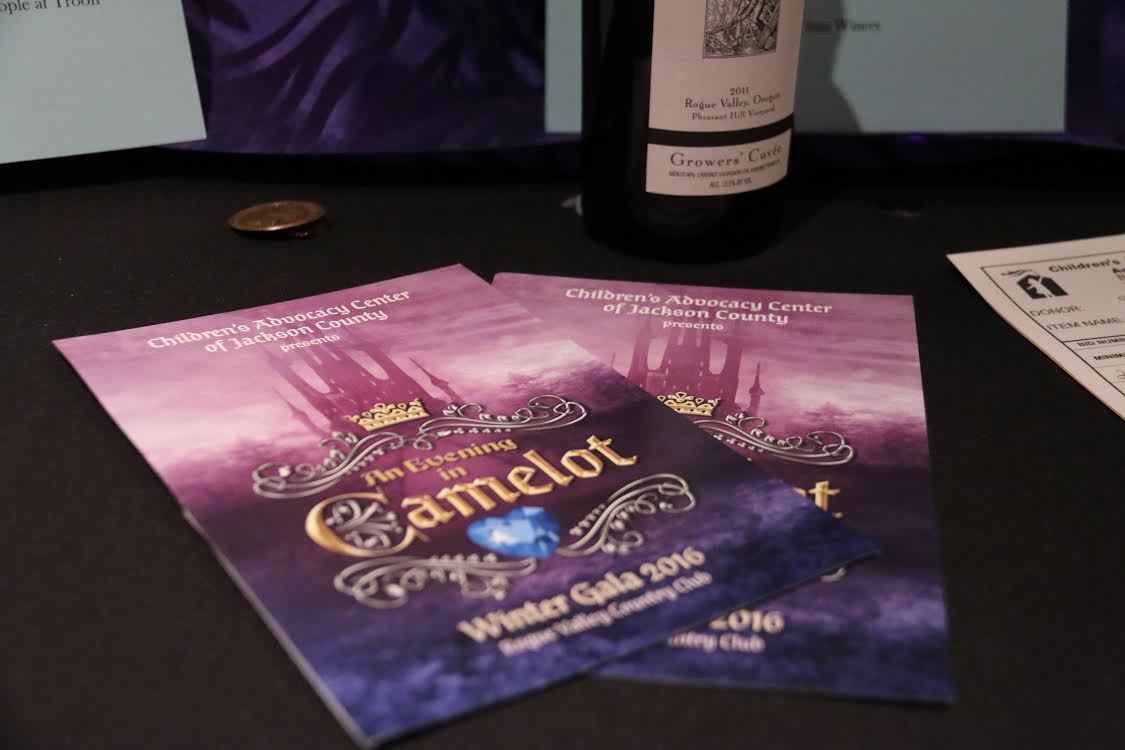
  • Winter Gala 2016:  Camelot and Good Deeds for Children

    Winter Gala 2016: Camelot and Good Deeds for Children

    By Michelle Wilson, Development Director for The Children’s Advocacy Center of Jackson County

    “Don’t ever let it be forgot
    That once there was a spot
    For one brief, shining moment
    That was known as Camelot!”
    ~ Camelot (the movie)

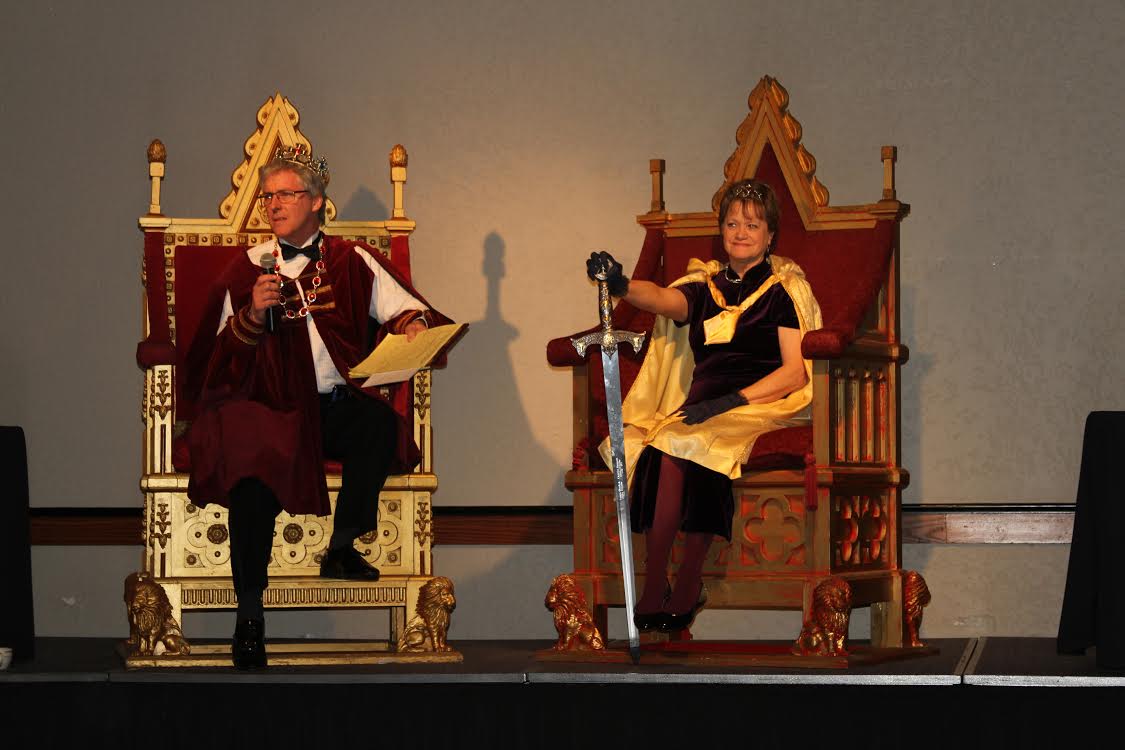
    King Arthur and Queen Guinevere ~ played by Geoffrey and Joi Riley

    For one brief moment on January 30, Camelot was alive and well in our part of the world. A mighty team of volunteers created a Medieval castle, complete with King Arthur and his court, and the community was invited to enter inside.

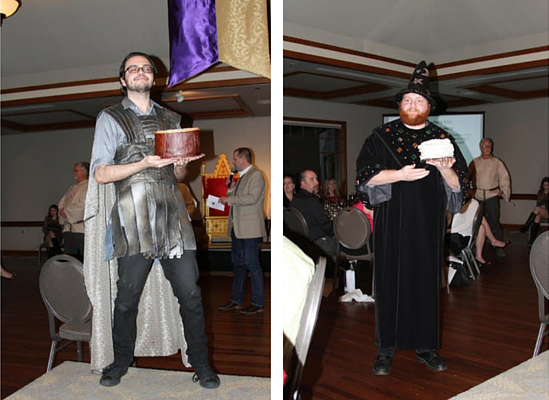
    Untitled design (19)Dragons, knights, lords and ladies all came together to help us create a mythical world – for just one evening – and over 250 people joined us at our annual Winter Gala in a night which focused on children. King Arthur and Queen Guinevere (played royally by Geoffrey Riley and his wife Joi), held court, and Lancelot, Morgaine, and Merlin moved through the castle walls entertaining our guests.

    8 - Michelle blog - for part about blue heartThis trio also had a quest: they sought to find the pure of heart and mind and give away blue crystal hearts to anyone who was worthy.

    To receive a heart, guests had to share a line or two of Old English (showing wisdom with their words), correctly answer a question about Camelot (showing knowledge of this mythical world), or share about One Kind Deed they had done that day for children (showing kindness and a pure heart).

    It was a night of celebration, and all of our guests did Kind Deeds for children that evening. Celebrations bring us together and strengthen our sense of community. This celebration brought us all together in the noble quest of raising awareness of the great need for support in keeping children safe and healthy in our community.

    Thank you to all who attended, to our noble and generous sponsors, and to those who worked countless hours to make it all happen!

    Collage

  • The Cost of Even Keel

    This is a post by Leah Howell, M.S., Training Coordinator for Protect Our Children Child Abuse Prevention Training of Jackson County, Oregon

    A few years ago when my son was around 4 months old, we were concerned about his weight, so I did a Google Images search on what a typical 4 month old should look like.

    I found a picture of a baby who could have been my son’s twin, and was born within weeks of my son. Out of curiosity, I clicked on the image and then the accompanying article. It was the story of a baby boy who had been repeatedly beaten, but each time was sent back home to his parents. At four months old he died at the hands of his father. To this day, when I think of that little boy, who deserved nothing but unbounded love, I feel deep, almost overwhelming sadness.

    These strong feelings have significance to me because I have a 3 year old boy whose emotions seem to fluctuate between unprecedented elation and severe emotional distress from moment to moment.

    My reaction to this roller-coaster of expression is to become “The Stabilizer.” I am the adult, after all. I am the person who needs to remain emotionally impervious to the tragedy of the minute, and offer some rational thought or feelings that balance his “crazy-makin’.” My son responds surprisingly well to most of my rational input-even at his age (you can give my husband all the credit for those genes).

    Though I know “The Stabilizer” to be a necessary role currently with my three year old, I find that this function has morphed, and has begun to seep into me in a more personal way.

    I find that it is my “go to” survival technique. When life gets stressful or overwhelming, I am the one who keeps the ship moving and minimizes any rocking – emotional or otherwise. Recently, I have sensed myself unwilling to contend with my own complicated emotions. Instead of feeling them, I choose to stuff them, then rationalize my way out of dealing with them.

    I sometimes wonder how damaging this survival technique is. Used too often, this practice could keep me from focusing on the things that really matter – both in my family and community.

    After all, allowing yourself to feel deeply is most often what compels a person to change or take decisive action.

    Well known to most people, child abuse (and especially child sexual abuse) has been allowed to continue under the noses of many who would be outraged that it was occurring. But when adults in proximity were faced with this possibility, they perceived this truth as too devastating to them, and they took no action.

    When I consider these tragic situations, I realize that I cannot continue as “The Stabilizer” for much longer, and still be the responsive parent I need to be. I acknowledge that the best protection I can provide to my son is to possess the will and courage to face the realities of life, (no matter how painful they may be) and walk alongside him through them- hand in hand.

    The cost of even keel blog post
    Leah Howell